 How to resolve AdBlock issue?
 Tom Martienssen uses Sennheiser
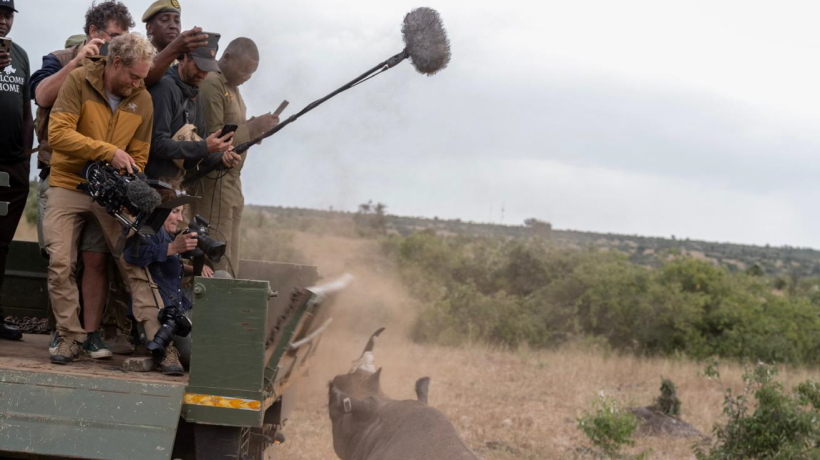
Picture: David Chancellor
When it comes to wildlife filmmaking, capturing the essence of nature is not just about stunning visuals - sound plays an equally crucial role. In Rhino, the latest documentary by Tom Martienssen, founder of Dustoff Films, the sounds of the African wilderness become a key narrative tool. The documentary, which follows a group of elite wildlife rangers in Kenya who are working to protect the critically endangered black rhino, is garnering attention for both its powerful conservation message and its exceptional audio quality. At the heart of the film’s sound are Sennheiser’s cutting-edge MKH 8000 series microphones, which helped bring the film’s immersive world to life.
From the deep rumbles of rhino calls to the subtle rustling of the grasslands, the film’s soundscape is as critical to the narrative as its visuals. The use of Sennheiser’s MKH 8000 RF condenser microphones allowed Martienssen and his small production team to authentically capture the environment’s sounds on location. The microphones provided clarity and detail, even in the toughest conditions Kenya’s wilderness could throw at them.
“We wanted the sound to be real,” says Martienssen. “We didn’t want to recreate wildlife calls or add in anything that wasn’t there in the moment. It was important that the sounds we recorded on location were the ones you’d hear if you were actually there with us, in the middle of the African savanna.” This commitment to authentic sound led the team to use Sennheiser’s MKH 8000 series microphones to ensure every audio detail was captured with precision in the midst of dusty, windy, and sometimes dangerous conditions, and helping to preserve the raw, unfiltered sounds of the Kenyan wilderness.
The MKH 8060, known for its highly directional pickup and clarity, was used throughout the film to capture crisp, isolated sound from specific sources, such as animal calls and rangers’ conversations. Its compact size, incredible sensitivity and climate-proof robustness made it ideal for use in the field, even in challenging environments like the Kenyan savanna. Martienssen first met Sennheiser’s Tim Constable while giving a lecture on using RED Digital Cinema cameras for storytelling. “Our conversation shifted to the film’s sound, and that’s when Sennheiser, through Tim, provided us with a double MS stereo rig, featuring two MKH 8040s and one MKH 8030 mic,” he says. “We used this setup to capture natural ambient sound from each location in the film to create an immersive soundscape.”
“The 8000 series mics, whether it’s the 8060, 8030, or 8040, all sound very similar, so you can easily mix and match them without any issues,” Constable adds. “The sound profile stays consistent, which meant there was no need for extensive post-production adjustments. Based on our discussions with Tom, we came up with a solution that worked seamlessly from the start.”
Alongside the MKH 8060, the double MS stereo rig provided another layer of sonic richness, and allowed Martienssen and his team to record spatially immersive sound: “We used two main microphone setups,” explains Martienssen. “One was an MKH 8060 mounted on the camera, capturing audio wherever the camera pointed. The second setup involved a boom mic, where we alternated between the double MS stereo rig with two MKH 8040s and an MKH 8030, or just the MKH 8060. We did a side-by-side test with the 8060 we had from the start and another one we got about six months ago. After two and a half years of use, they sounded identical - just like the new one, straight out of the box.”
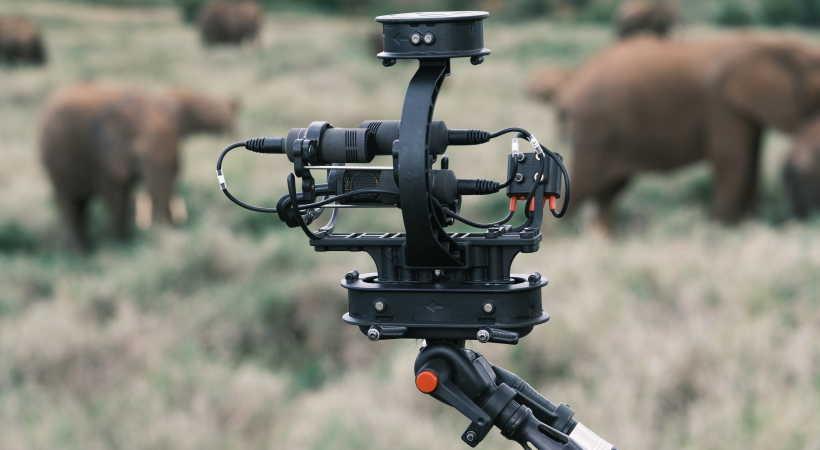
Picture: Dustoff Films
Before each shoot, they decided which setup would work best for the specific scene. They found the MKH 8060 was great for its directional focus and compact size, while the double MS stereo rig excelled in capturing the full surround sound of a scene by placing it in the middle of the action. “We didn’t have the time to swap microphones between setups, so we committed to one system per shoot,” Martienssen continues. “We wanted to keep things simple. Instead of the usual setup with two cameras and one boom mic, we reversed it: we had two MKH 8060 mics - one on the camera and one on a boom following the person I wasn’t filming. This setup allowed us to capture great sound with a smaller crew, keeping costs down and making it easier to work closely with the rangers without getting in the way.”
“We used Sennheiser HD 25 headphones throughout, especially for James during recording. Many of the situations we were in were dangerous, with a lot of movement around us. We always recorded in 32-bit float to give us a larger dynamic range, so even if James couldn’t react quickly - like if he was running from a rhino - we’d still have clean audio without worrying about overmodulation. The HD 25s were key, offering clear audio while still allowing us to hear what was happening around us, which is crucial when you’re dealing with rhinos.”
One of the standout features of the Rhino documentary is its Dolby Atmos sound mix, which was mixed using 70 speakers to create a rich, immersive experience. “We wanted to push the boundaries of documentary filmmaking,” says Martienssen. “With Dolby Atmos, the audience is no longer just watching the film - they’re experiencing it. You can hear the rhinos moving behind you, feel the wind whipping through the trees, and become enveloped in the environment. It takes the documentary to a whole new level.
The Rhino documentary is now screening nationwide in the UK, with plans to screen globally. With its commitment to high-quality sound, immersive storytelling, and a message of hope for endangered wildlife, the film promises to be a standout example of how sound can elevate the documentary genre.