 How to resolve AdBlock issue?
 Free Sonuscore LUX Orchestral Strings Update
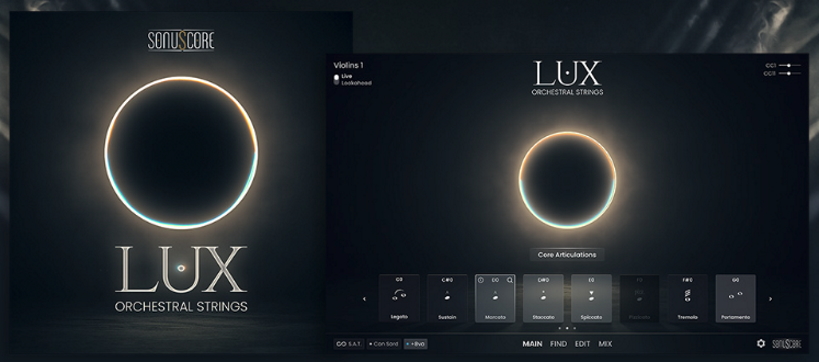
Sonuscore today released a major free update for LUX Orchestral Strings, its flagship cinematic string library. The update adds a substantial volume of new recorded material and articulations, with a clear focus on the areas composers reach for most in modern cinematic scoring: rhythmic motion, evolving textures and playable runs. All existing LUX users receive the update at no charge.
This update was shaped by the LUX user community. Sonuscore gathered feedback from composers using the library in active scoring work, identifying the articulation types and workflow gaps that came up most consistently. The new recorded content – the ostinatos, runs legato, portamento transitions and movement articulations – addresses those requests directly. Where some ideas are still in development for future updates, this release already represents a significant expansion of the library’s musical range.
What’s New In Version 1.1:
- New Recorded Ostinatos. The update introduces a set of newly recorded ostinatos covering two distinct musical approaches. Root Note Ostinatos build a rhythmic foundation on a single pitch. Interval Ostinatos create a pendulum-like motion between notes, recorded across a range from a minor second up to a perfect fourth. The result is naturally phrased harmonic motion with real bow movement – the kind of rhythmic bedrock that underlies much of modern action and suspense scoring.
- New Articulations. Across all five string sections, the update adds a large collection of articulations targeting three areas: enabling the performance of fast runs via Runs Legato, expressive Legato/Portamento transitions triggered by velocity, and a new set of Movement articulations that create evolving textures shapeable in real time. Violins I and Cellos also receive Legato–Portamento specifically, and all sections gain Sul Tasto, Sul Ponticello and Tremolo variants within the movement set.
- Motion Scoring Articulation Sets. A dedicated collection of ready-built articulation sets groups the new ostinatos and movement articulations into context-specific setups. These load directly into the existing key switch system, so composers can access motion-based writing styles without building setups from scratch. The Ensemble Instrument receives these sets too, giving full-ensemble writing the same motion capabilities as the individual sections.
- Ensemble Playability Enhancements. The Ensemble Instrument has received a significant refinement in playability, particularly for polyphonic legato performance. All Articulations can now be played in an overlapped manner, allowing multiple voices to transition smoothly and independently. The result is a far more fluid and responsive playing experience, bringing a new level of expressiveness and control to full ensemble writing.
- Sound Improvements. The underlying sample material has been further denoised and polished across the library. The character of the recordings is preserved; the noise floor is not.
- Workflow Improvements. Two practical additions make large articulation setups easier to manage. A new option in the Settings Page allows up to 24 articulations to be loaded directly on the Main Page, reducing page navigation during session work. On the Edit Page, articulation ranges can now be defined using velocity rather than the mod wheel, offering an alternative performance approach for composers who prefer to work that way.
The update is free for all existing LUX Orchestral Strings users and available now via the Sonuscore user portal, while LUX Orchestral Strings is priced at €499.