 How to resolve AdBlock issue?
 beyerdynamic DT 7x Series In-Ear-Phones
Acoustically tailored Models for Professional Use
Author: Peter Kaminski | Photos: Peter Kaminski and archive (2)
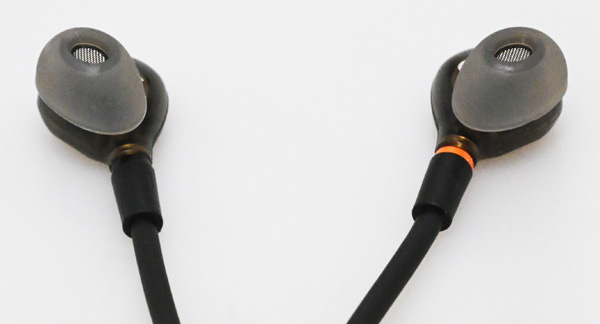
At NAMM in early 2025, Heilbronn-based headphone specialist beyerdynamic unveiled its DT series. These in-ears are specifically designed for professional users, both on stage and in the studio. The series currently comprises four different models aimed at different user groups. We tested all four models for you.
Concept
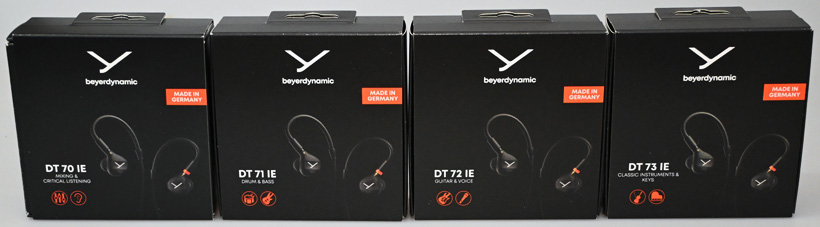
The following models are available:
- DT 70 IE Mixing & Critical Listening
- DT 71 IE Drum & Bass
- DT 72 IE Guitar & Voice
- DT 73 IE Classic Instruments & Keys
The drivers are identical in all models, but the acoustic tuning is different and adapted to the targeted user group. A large musical company was consulted to optimize the tuning of the sound.
The DT 70 IE, with its linear sound characteristics, is specially designed for mixing in the studio or FOH. It takes into account the volume-dependent perception of the ear at different frequencies. In this context, the term “auditory-correct volume” is often used because human perception of volume is highly frequency-dependent.
The DT 71 IE ensures accurate reproduction of both low and high frequencies, for example, to precisely reproduce the overtones of a bass guitar.
The DT 72 IE is aimed at guitarists and singers, with particular attention paid during development to achieving a balance between the bass and other frequency ranges. The upper mids are slightly boosted here.
The DT 73 IE, which is aimed at both orchestra musicians and keyboard instrument users, has a very linear response in the range from 20 Hz to 1 kHz. There is a subtle boost above 5 kHz.
Technology
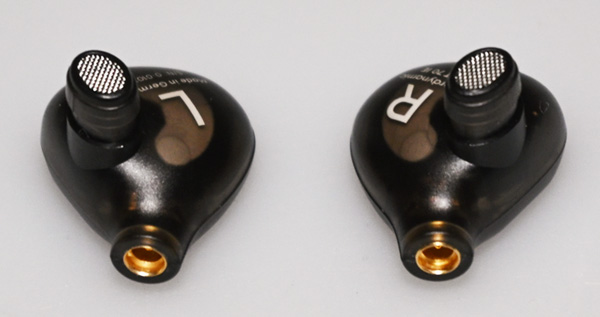
The dynamic driver used is the TESLA11, which is also used in the Xelento in-ear headphones for consumer users and is very compact and lightweight (3 grams per earpiece). This is also due to the fact that it is a one-way single driver.
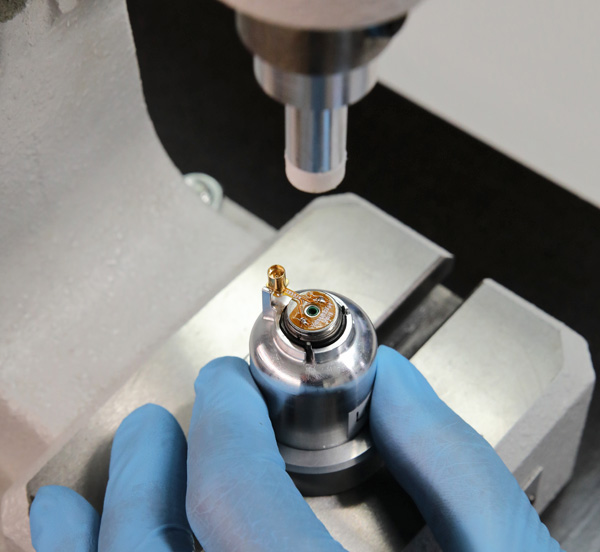
It should be emphasized that not only is the development taking place in Germany, but the delicate in-ear headphones are also being manufactured manually by experts in Heilbronn (see photos from the beyerdynamic production facility).
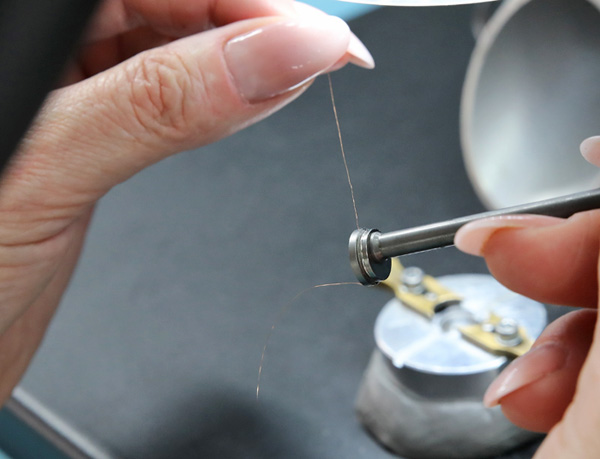
Let's take a look at the technical data. Incidentally, the headphones are also sweat and splash-proof. The DT 71 IE complies with protection class IP 65 (dustproof), and the others even comply with protection class IP 68 (permanent submersion).
The impedance is 16 ohms, and the manufacturer specifies the frequency range as 5Hz to 40kHz and the external noise suppression as 39dB (A). The nominal load is 200mW. beyerdynamic specifies a distortion factor of 0.02% at 500Hz and 1kHz (@ 1mW).
The sound pressure level at 1kHz and 1mW is 113dB SPL for the DT 70 IE, 112dB SPL for the DT 71 IE, 114dB SPL for the DT 73 IE, and 115dB SPL for the DT 73 IE, or between 129dB SPL for the DT 70 IE and 131dB SPL for the DT 73 IE at 1kHz and 1Vrms.
Scope of Delivery
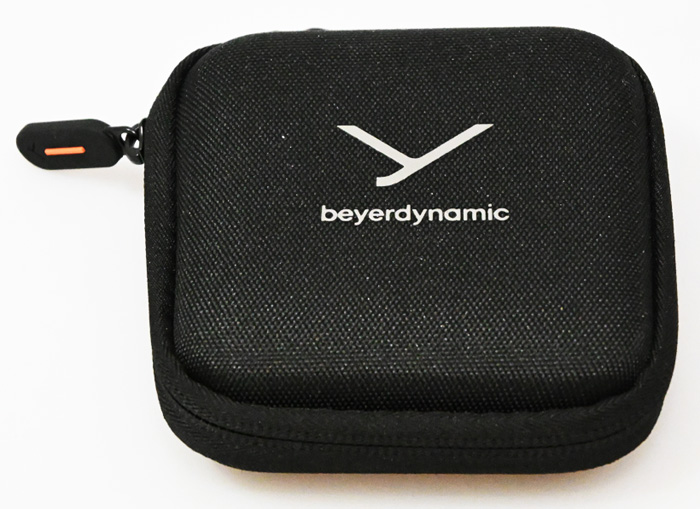
The product is delivered in a textile carrying case containing the headphones and accessories.
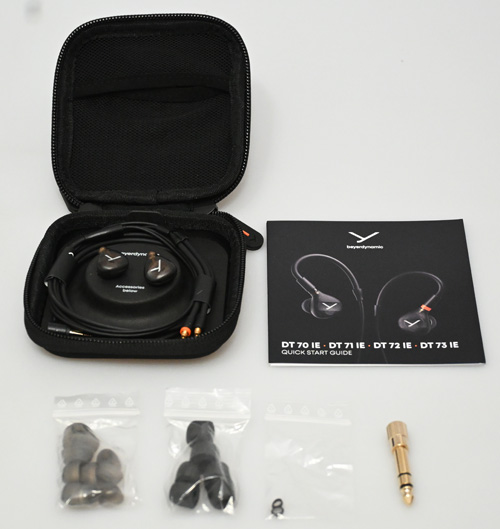
A quickstart guide in English for basic handling is also included, along with various ear pieces, a 1.4-meter connection cable with a stereo mini plug (3.5 mm), and an adapter to a 6.3 mm TRS plug.
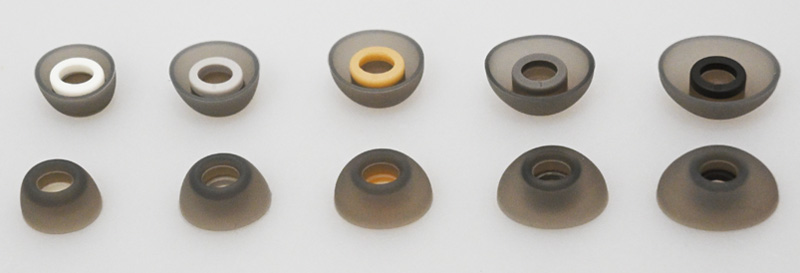
There are two different types of ear tips: silicone pieces (see image above) in five different sizes, which are color-coded, and memory foam tips in three different sizes (see image below). The latter are somewhat hidden under the headphones in the case when delivered.
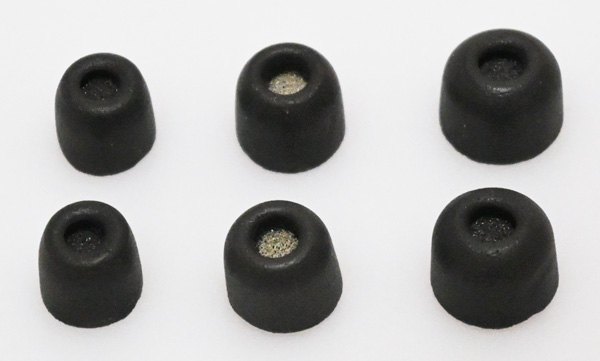
There is also a small bag with two replacement cerumen protection grilles. It is important to note that all of these accessories are also available as replacement parts on the beyerdynamic website.
In Practice
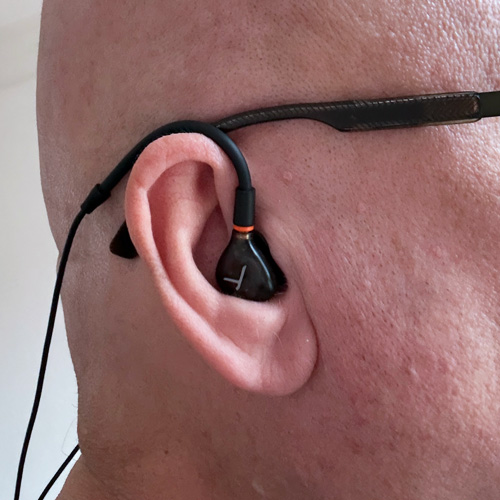
Of course, it is always important with in-ear headphones that they fit well and securely, and seal the ear canal properly. Thanks to the many different ear tips, beyerdynamic offers a fitting solution for everyone. Personally, I always have problems with in-ear headphones staying in place. However, the DT 7x IE really impressed me in this regard. They stay in place very well, even when you move, and their compactness and low weight contribute to their comfort. The slightly thicker cable is routed upwards around the ear, further securing the headphones' position on the ear (see photo above). As you can see, this also works perfectly for people who wear glasses.
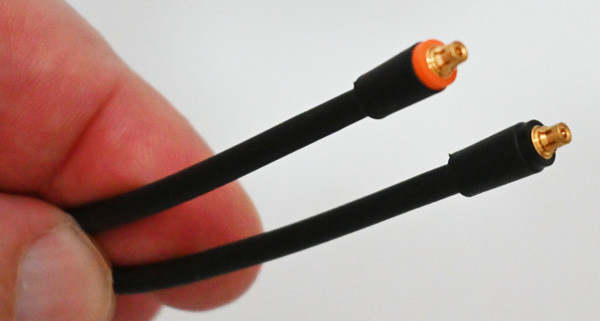
The cable has MMCX coaxial connectors on the headphone side, which are intended for high-frequency transmission - a very professional solution. The connection is easy to make (snap connection), and the connector is securely locked in place and cannot come loose on its own without intervention. The cables with the headphones connected can also be easily stored in the case for transport, so you don't always have to disconnect the cable. There is a small plastic part on the back of the headphones on the cable that can be used to adjust the point where the cables split. The kevlar cables are very flexible, and the channels are color-coded on the plug.
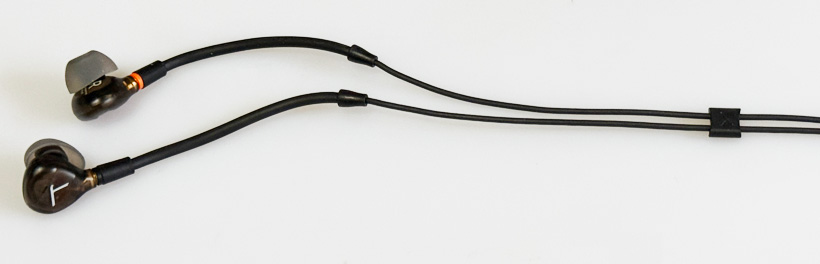
The pads are also easy to replace, although there is a slight difference in handling between the silicone and foam adapters. The silicone pieces must be applied in such a way that the oval shape is retained. The plastic ear pieces are best screwed on rather than simply snapped on.
The DT 70 IE is certainly the most neutral of all, and very good for sound evaluation - but also an ideal all-rounder in terms of sound. The DT 71 IE offers significantly more in the bass range but does not sound bass-heavy; instead, it emphasizes instruments in the lower frequency range without compromising the overtones of instruments or transients, which remain well balanced in terms of sound. This is particularly noticeable in the overtones of a bass. Many other headphones offer so much in the bass range that it sounds “woozy” and all the energy is concentrated in the bass. This is not the case with the DT 71 IE. When playing back a monitor signal of the entire band and the audience atmosphere, the overall sound impression should not be destroyed. With the DT 72 IE, which we tested with an electric guitar, the tuning of the treble frequencies is immediately noticeable in a very positive way, especially with distorted or very attack-rich sounds. We also played back vocals, and here the sound is just right, neither too centered nor too treble-heavy. The DT 73 IE is not that far removed from the DT 72 IE, but it is slightly more restrained in terms of frequency range, making it particularly suitable for monitoring acoustic instruments and orchestras. There is a slight emphasis on the high frequencies. The DT 73 IE can also be used for electronic keyboards, but depending on your taste and application profile, you could also choose the DT 70 IE.
 photo: grunwald-photography
Since the DT 71 IE is an in-ear monitor designed specifically for bass and drums, we invited Stephan Kerber, head of the media agency IDD-IS, which handles our publishing activities, to join us for the test. He is a bass player and frequently performs live. Here is his report: "I was able to test the DT 71 IE in-ear headphones live during my band's New Year's Eve performance in Bremen. The problem with other headphones was that the bass tone had difficulty coming through in the overall mix. In addition, the attenuation of external noise was not good enough, so that, for example, the drums on stage influenced the headphone mix.
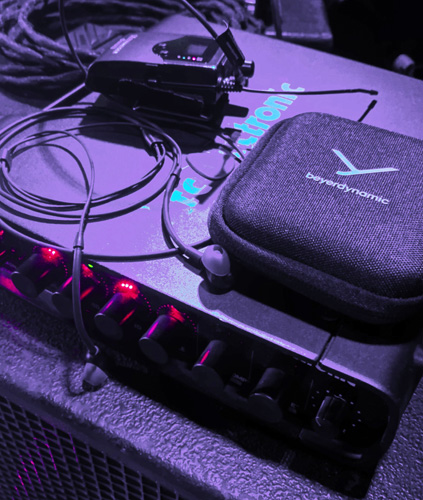
For this reason, in most cases, I have a bass system (see fig. above) on stage as a precaution, so that I can increase the bass volume there if necessary. However, this actually contradicts the idea of in-ear headphones. With the DT 71 IE, this is no longer necessary. The bass is nicely present in the headphone mix and the bass tones are powerful, but the higher frequencies also come through well. The external noise attenuation also works so well that I no longer have to run the mix on the headphones at a high level. I still need to experiment a little with the fit, as the headphones fell out of my ears a few times, but I have this problem with all other in-ear headphones. Next time, I will secure the cable and try other sizes of the ear tips. But it must be said that we move around a lot on stage."
Overall, the various models are very well suited to their respective target applications. It is clear that a lot of effort has gone into the tuning and that user experience has also been taken into account. It is also noteworthy that the DT series is based on a single-driver concept. In recent years, headphone drivers have become even better. Compared to single drivers, multi-driver systems require greater technical effort and also pose a major technical challenge in terms of coordinating the individual paths and transitions, which does not always lead to better results across all products. More is not always better. Another remarkable feature of the DT series is the high sound pressure and the external sound attenuation of 39 dB (A). Nowadays, it is almost always the case that the audience or ambient sound is fed through the monitor mix, which allows for better balance. High external noise attenuation is helpful in this regard.
Conclusion
DT series in-ear headphones cost just under 500 Euros each, placing them in the mid-range price bracket for professional in-ear headphones. Given the high manufacturing quality, the scope of delivery, and, last but not least, the positive sound rating, this is an absolutely reasonable price. What is interesting about the concept of four models tailored to different sound applications and the many ear adapters is that it already offers a high degree of customization without the need for an otoplasty at a hearing aid acoustician to customize the ear piece.