 How to resolve AdBlock issue?
 Fostex TH1000RP & TH1100RP
Flagship Magnetostatic Headphones from Fostex
Author and photos: Peter Kaminski
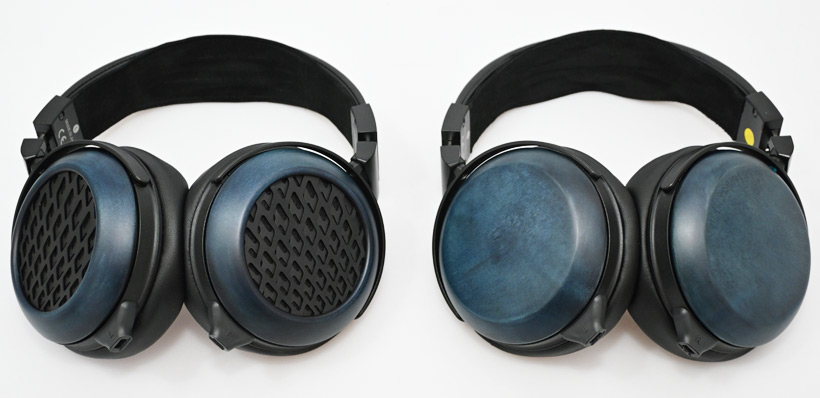
Fostex has a long tradition in headphone development and manufacturing. In this review, we take a closer look at two flagship models: the acoustically open TH1100RP headphones and their sister model, the closed TH1000RP. Both headphones are equipped with identical magnetostatic drivers, which are also often referred to as planar magnetic drivers. Fostex introduced its first headphones with a planar magnetic driver, the T50, back in 1974. It was one of the first to use this technical principle. Therefore, the company has a wealth of experience in this area - and the technology has been continuously developed. Incidentally, both headphones are classified by Fostex as consumer products rather than as professional audio equipment. Despite this fact, we have decided to present them - for a specific reason.
Concept and Technical Data
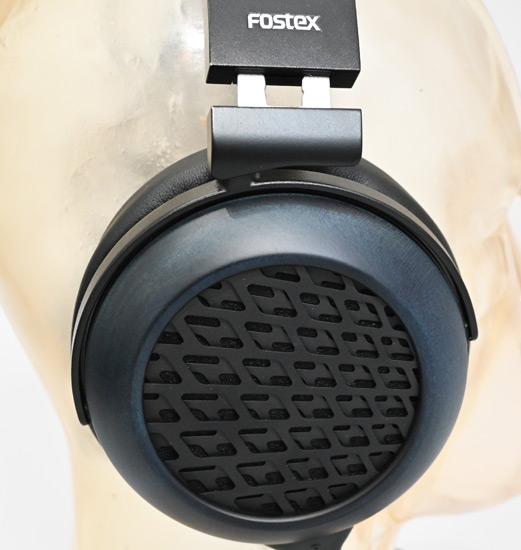
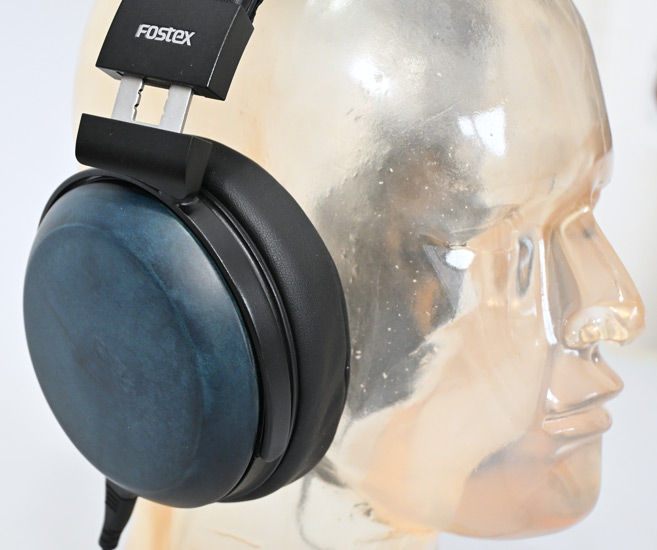
Let's start with the technical data. Both headphones feature the same driver. The impedance of the headphones is 32 ohms, which is very low, as is the case with many modern headphones. The maximum input power is specified as 3 watts. Fostex specifies a frequency range of 10Hz to 40kHz. The sensitivity of the open TH1100RP (see figure above) is 96dB/mW and that of the closed TH1000RP (see figure below) is 100dB/mW.
The weight without the connection cable is 420 grams for both headphones. The outer ear cup is made of solid maple wood, which has been dyed in a special blue color. This so-called Aizome dyeing is based on a Japanese tradition dating back to the 6th century. This gives each headphone an individual look with a distinct wood grain.
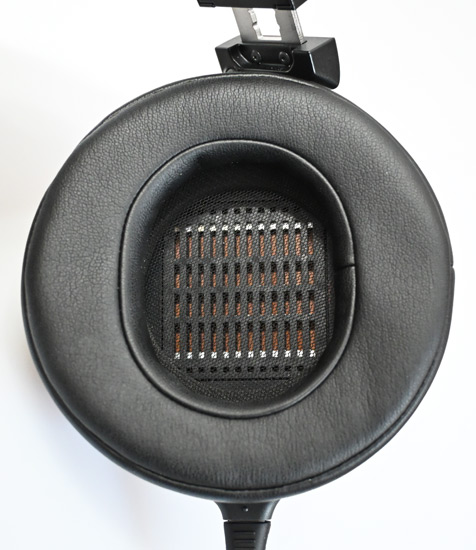
Now a few words about the magnetostatic drivers. Unlike a dynamic driver, the coil does not move in a permanent magnet to drive the diaphragm; instead, the coil is located on the diaphragm itself. This design results in significantly less mass that needs to be moved, allowing the diaphragm to follow the electrical input signal with greater precision. Consequently, there is less overshoot or overswing due to inertia, leading to greater linearity.
Compared to the T50 RP MK3 and MK4, a substantially larger driver has been installed here, enabling the use of more magnets. Furthermore, the shape of the coil on the carrier material has been changed and optimized. This has also made it possible to better suppress unwanted resonances on the diaphragm.
The headphones come with a two-meter cable with a 6.3mm jack plug with gold-plated contacts and an oxygen-free cable. On the headphone side, the gold-plated plugs are rhodium-coated for extra robustness and corrosion resistance. An optional cable is also available for balanced operation of the headphones, but only with a 4.4mm Pentaconn plug (type designation ET-TH4.4BL). Unfortunately, a cable with a 4-pin XLR connector, commonly used in the professional sector, is not available.
In Practice

The headphones are mechanically identical, except for the ear cups. The size can be adjusted using a grid on both sides (approx. 40mm each). As can be seen, there is an additional headband underneath the rigid headband. Although the headphones are not particularly light with a weight of 420 grams, they are very comfortable wearing and do not cause any pressure points. Even prolonged wear, which is more common in professional settings, is absolutely no problem. The ear cups are large and generously enclose the outer ear. The padding is made of a special synthetic leather that feels very soft.
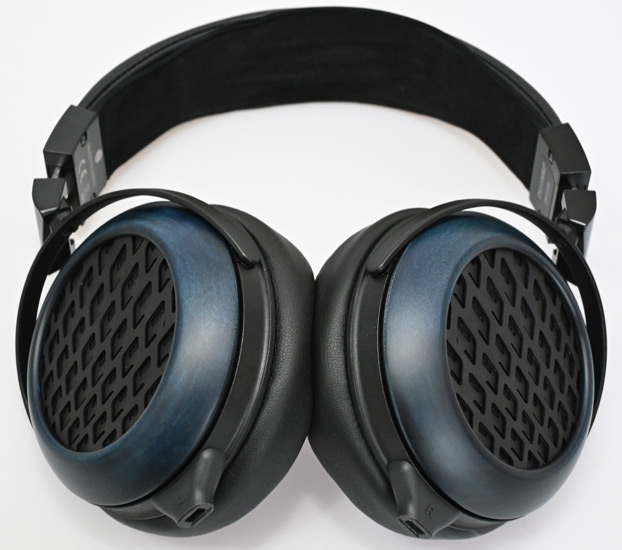
The ear cups cannot be rotated far enough (see image above) to lay completely flat on a table. This feature is more commonly found on headphones designed specifically for studio use.
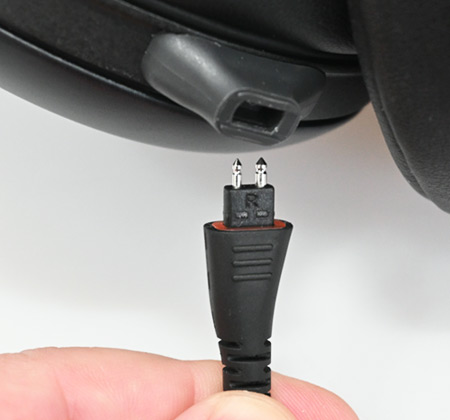
The “L” and “R” markings on the headphones and plugs are relatively small and discreet. As is often the case with hi-fi equipment, the right plug is marked red. The pins on the plug are of different sizes to prevent accidental twisting. This plug design is also used on other Fostex headphones. Due to the very high sensitivity of the headphones, you don't need to turn the volume up very high to hear them loud. The loudness is similar to that of the Audeze LCD-2, for example. For the tests, we used the Lake Pople G108 and the SPL Phonitor 2 as headphone amplifiers, exclusively in unbalanced mode.
When comparing the open TH1100RP and the acoustically closed TH1000RP, it quickly becomes clear that the two headphones also have different tonal characteristics due to their respective designs. The manufacturers take very different approaches here. Some try to make the sound of the open and closed versions as similar as possible through acoustic measures. Fostex has not done this. As a result, although both have similar transient responses and linearity due to the same driver, the frequency weighting of the two drivers differs.
The open TH1100RP is characterized by clear sound, as well as precise imaging and localization. This is also helped by the fact that the bass and treble are not overrepresented, as is the case with so many headphones for the consumer market. However, describing the sound as “midrange” would be inaccurate. The headphones may not suit the taste of every consumer who just wants to listen to music, perhaps with a little embellishment. That's why I'm a little surprised that Fostex has classified both headphones in this category. I can well envision the TH1100RP being used for mastering. These are headphones where the focus is not on having fun listening to music, but on precision and detailed sound reproduction. In contrast, the closed TH1000RP offers significantly more pressure in the bass range, making it more suitable for mixing and production. This model is also likely to appeal to normal music listeners.
Conclusion
The TH1000RP costs around 3,000 euro, and the TH1100RP costs around 3,300 euro. This puts them in the upper price league. The reasons for the price can certainly be found in the materials used, such as the wooden shells and high-quality other materials such as plugs, and so on. However, this design correspondingly offers an elegant appearance for the headphones. For the price, however, I would have preferred a storage box rather than just a storage bag. In addition, the product presentation to the customer does not quite match the price and sound quality. I can imagine that the TH1100RP, in particular, will find many fans in studios, as it is fairly neutral, clear, detailed, and does not embellish the sound.