 How to resolve AdBlock issue?
 Landscape Ferrous
Spinning Magnetic String Resonator
Author and photos: Peter Kaminski
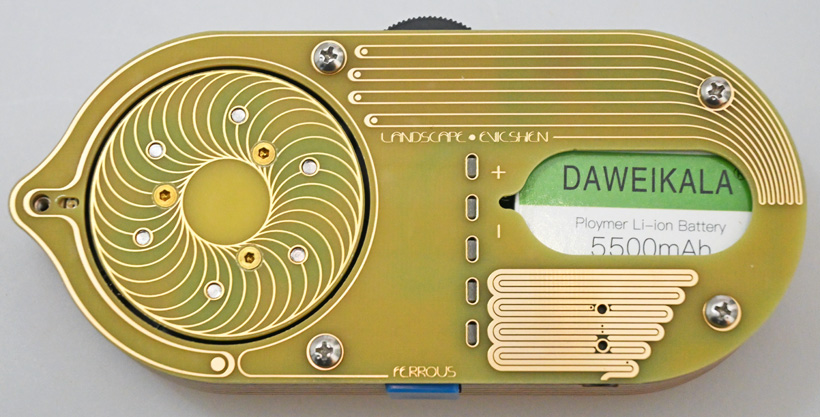
In this review, we would like to introduce a rather exotic product, the Ferrous from the American manufacturer Landscape, which is known for its unique, highly experimental instruments and tools.
Scope of Delivery
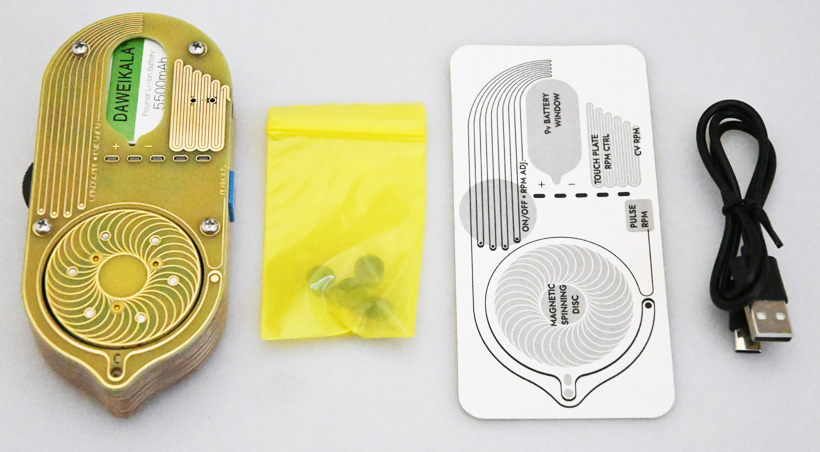
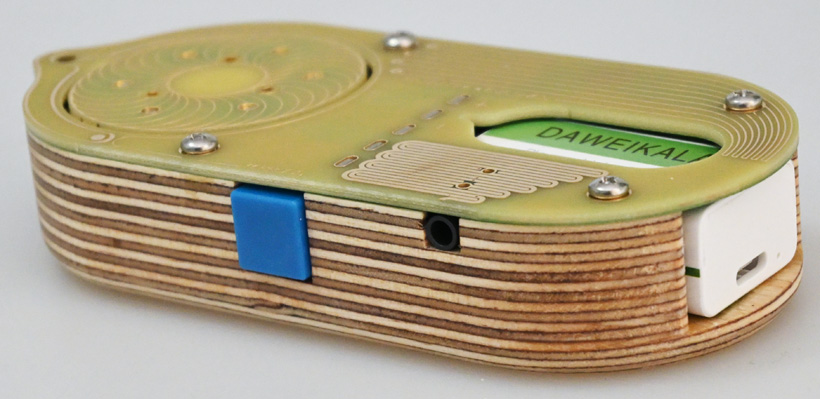
In addition to the actual device (133 x 64 x 25mm, 150g), made from a birch plywood body and fiberglass circuit board material with copper tracks, a lithium-ion battery (9V, 5500 mAh), a USB charging cable, attachable rubber feet, and a quickstart guide are included. Users can download detailed instructions from the manufacturer's website (PDF).
Concept and Technology
Ferrous was developed in collaboration with San Francisco-based artist Victoria Shen, who composes very experimental music.
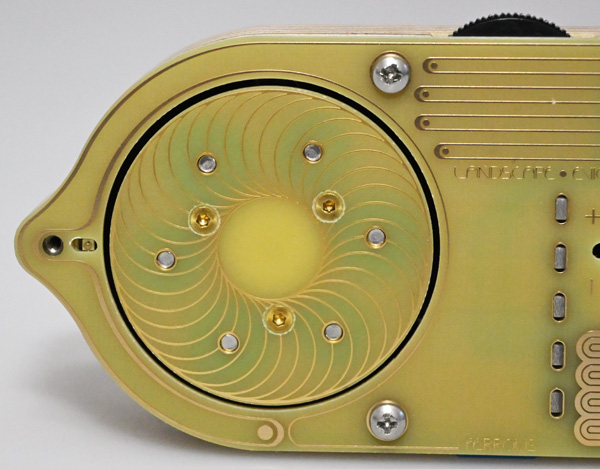
The technical principle behind Ferrous is actually very simple. There are six small magnets on a disc. This disc rotates, driven by a motor. When held over a string, if it contains iron, the magnets cause it to vibrate. However, other objects made of magnetizable material can also be excited.
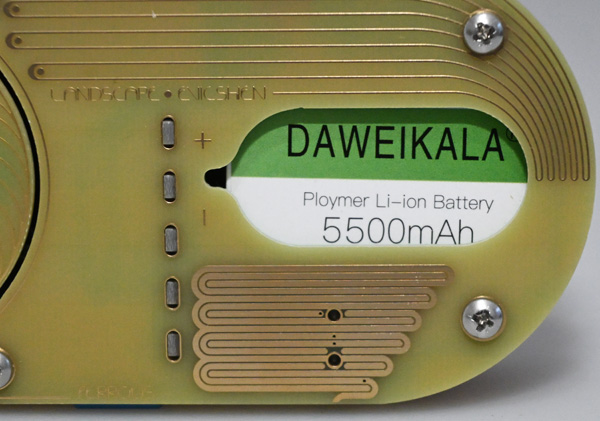
Ferrous is switched on via a knob, and the rotation speed can be adjusted over a very wide range using this knob. The speed can be temporarily increased to the maximum using a button on the side of the device. The speed can also be increased within fine limits using a touch sensor. Another way of influencing the speed is modulation via a control voltage (0 ... 9 volts). There is a 3.5mm jack socket on the side of the device for this purpose.
Handling and Practical Use
I primarily tried out Ferrous with an electric guitar. It should be noted that the metal strings used must be ferromagnetic, i.e., contain nickel and/or iron. The distance to the strings must be very small, around one centimeter. If you get too close, you can feel the magnets working, and you have to be careful not to touch the strings with the Ferrous. In practice, it is not very easy to maintain this distance and it takes some practice, even if you already have experience with an E-Bow.
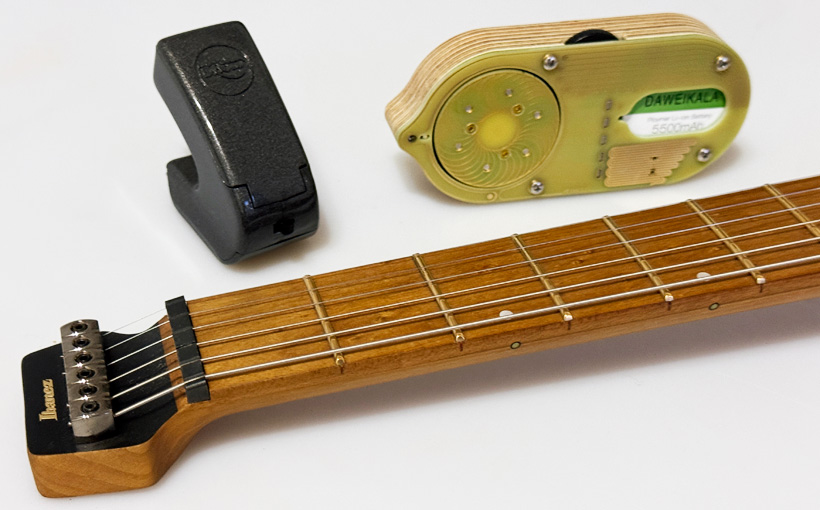
Let's start by comparing it to an E-Bow. Ferrous is a completely different tool in terms of both sound and handling. Unlike an E-Bow, it does not stimulate the fundamental tones, only the overtones. This means that Ferrous cannot be used to extend sustain. The playing technique is also completely different. For example, you can strike a chord and then use the Ferrous to shift the sound to the harmonics through excitation. While an E-Bow can certainly be used for melodic playing on a single string, Ferrous always excites several strings at the same time. This creates more ambient sounds. The tones themselves are very sine-like, i.e., rather low in harmonics.
The sounds produced on other instruments are also interesting. The key factor here is always the ferromagnetic properties of the strings. The sounds produced on instruments, such as the piano or fretless string instruments, such as the zither, are particularly interesting. The range of possibilities here is significantly greater than with an electric guitar.
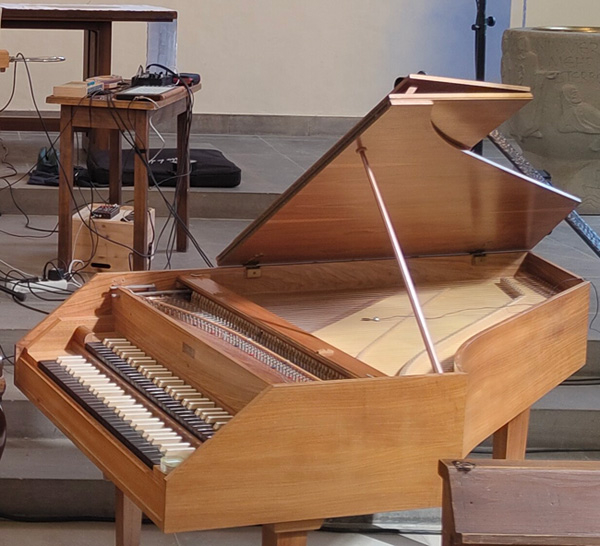
Our author Andrew Levine shared the following insights from his experience: "During a concert with Peer Schlechta in Kassel in April 2026, we had the opportunity to test out the Ferrous. Peer played a piano and a harpsichord alongside the Euler organ at the Auferstehungskirche, and with the latter, a lot of exciting sounds could be produced. You simply couldn’t get close enough to the piano’s strings. With the harpsichord, it was possible to create ethereal, floating sounds by slowly moving the Ferrous over the strings and carefully adjusting the rotation speed, which blended very well with my electronic sounds. I had attached a lavalier mic to the soundboard of the harpsichord to amplify the gentle sounds."
Conclusion
Ferrous costs around $300 and is available from various retailers or directly from the manufacturer. Ferrous is by no means a replacement for an E-Bow. Nor is it intended to be, conceptually speaking. It is rather intended for experimental use with string instruments and creates very interesting sounds in this context.