 How to resolve AdBlock issue?
 Sennheiser HD 480 PRO
Closed-back Headphones
Text and photos: Peter Kaminski
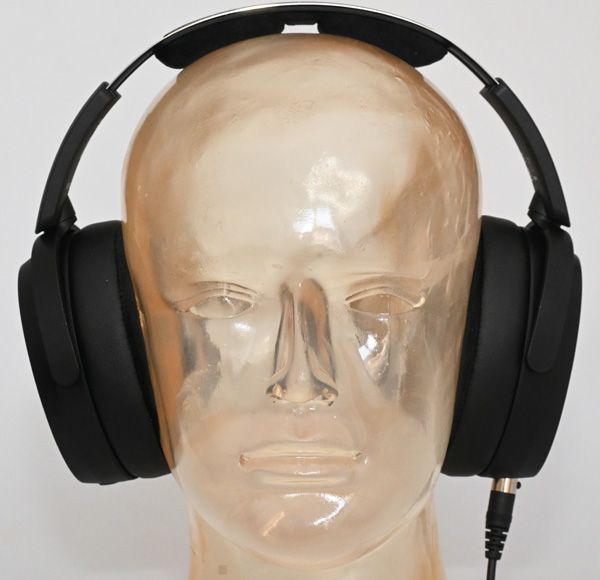
We’ve already reviewed the Sennheiser HD 490 PRO open-back studio headphones. Now the HD 480 PRO offers a closed-back version. We received a sample several weeks before the release and were able to test it extensively.
Scope of Delivery
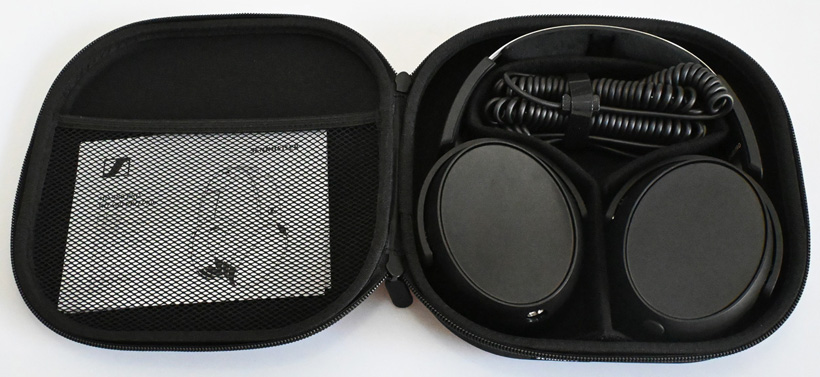
The HD 480 PRO also comes in a Standard and a Plus version, which differ only in the scope of delivery. The Plus version includes a travel case (see image above), while the Standard version comes with a fabric pouch instead. The included travel case (article no. 700503) is slightly more compact than the hard case included with the 490 PRO Plus, which is also available as an accessory (article no. 700292) if needed.
The scope of delivery includes a 3-meter-long connection cable with a 3.5 mm jack plug to a 4-pin mini-XLR plug. The jack plug comes with a 3.5mm to 6.3mm adapter. The cable is divided into three segments: a short coiled cable segment at the headphones, followed by a straight cable segment, and then another longer coiled cable segment. A shorter 1.8-meter cable is also available as an optional accessory (article no. 700288), as well as a balanced cable (article no. 700330) with a Pentaconn connector.
Technology and Design
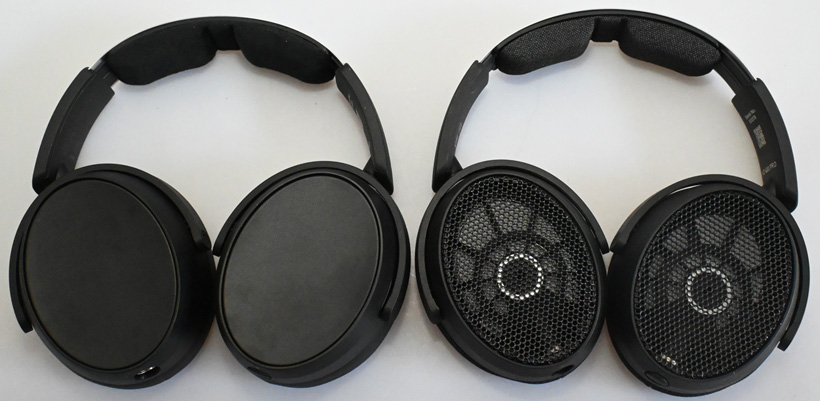
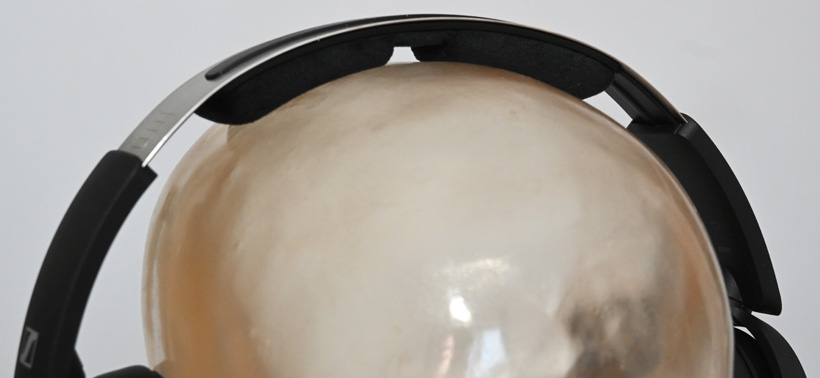
The headband and the entire mechanical construction are identical to those of the HD 490 PRO (see image above right). The 38-mm dynamic driver is also of the same type. The difference lies in the internal acoustic design and the closed ear cups of the HD 480 PRO (left).
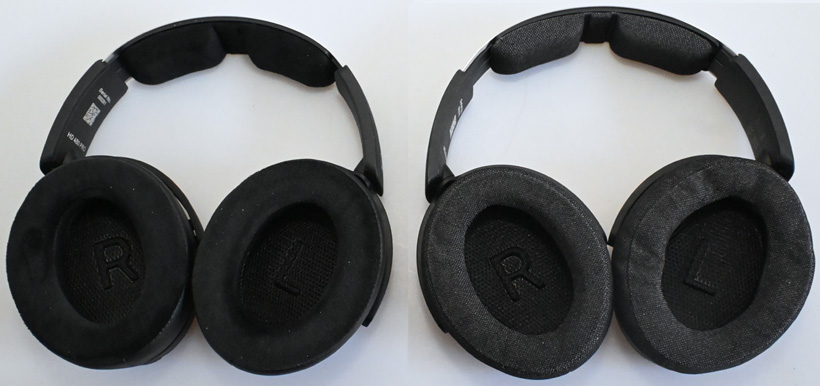
The HD 490 PRO comes with two pairs of ear pads: one set of velour pads (pre-installed at the factory) and one set of fabric pads. The HD 480 PRO comes exclusively with the velour pads. This also affects the sound. More on this in the section about the practical application of the headphones.
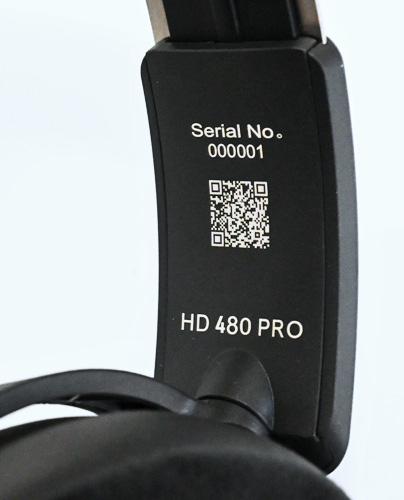
The headband construction is absolutely identical to that of the HD 490 PRO, meaning that a serial number with a QR code is also printed on the right side of the headphones. This is an interesting feature, as it likely provides access to the measurement curve stored by the manufacturer during production. There are manufacturers who then use this curve via a plug-in to compensate for manufacturing tolerances.
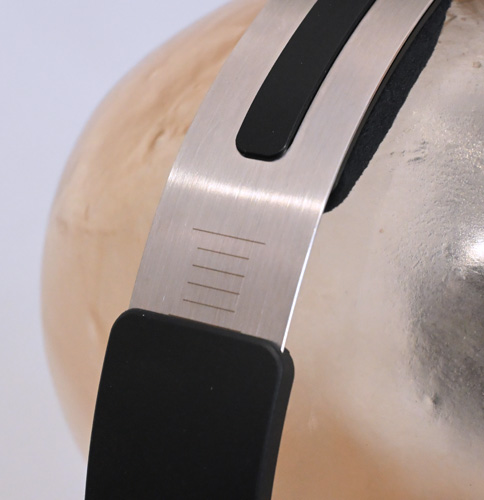
The markings used to determine the length of the headband are also the same as on the 490 PRO.
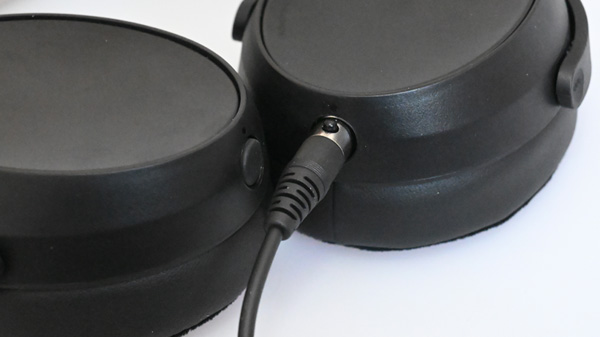
In addition to that, the connectors are also identical to those on the HD 490 PRO. Two four-pin mini-XLR jacks are used. This allows the cables to be connected to the right or left, and the unused one is sealed off. Thanks to the four pins, balanced operation is also possible here. It’s great that this feature was included even in the closed-back model.
Technical Specifications
Due to the closed-back acoustic design, there are naturally some differences in the technical specifications. The impedance remains the same at 130 ohms. The headphones thus fall within the mid-impedance range and can be easily connected directly to headphone outputs on instruments or small mixing consoles.
Due to the closed design, the ear cup is slightly heavier, and the HD 480 PRO weighs 272 grams without the cable - 12 grams more than the HD 490 PRO - though this minor difference is, of course, imperceptible when wearing them. The sensitivity of the HD 480 PRO is 98dB at 1kHz and 1mW (HD 490 PRO: 96dB). The maximum sound pressure level is 130dB SPL at 1kHz and 5% THD (HD 490 PRO: 128dB). The total harmonic distortion is slightly higher at >0.5% at 1kHz and 100dB SPL compared to the HD 490 PRO, which is >0.2%.
There is one point we haven’t mentioned yet, namely the frequency range, which is different. For the HD 480 PRO, this ranges from 3 Hz to 28.7kHz (@ -10dB), whereas for the open-back HD 490 PRO, it ranges from 5 Hz to 36.1kHz - meaning it is tuned slightly higher.
In Practice
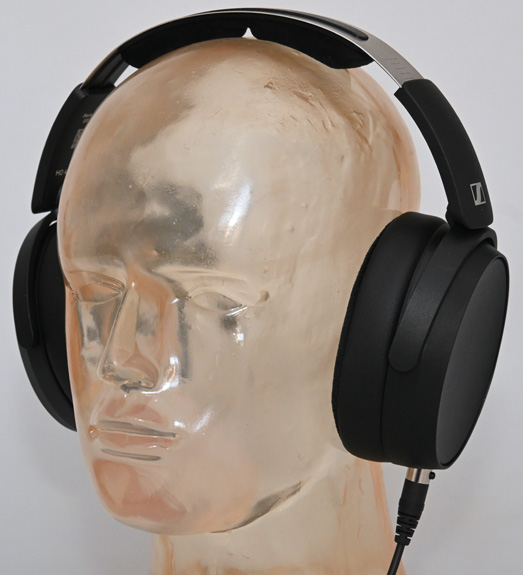
Much of what applies to the HD 490 PRO naturally also applies to the HD 480 PRO due to their identical construction. The high level of comfort deserves special mention here. The headphones can therefore be worn for extended periods without any issues or pressure points.
Now let’s talk about the sound. The HD 480 PRO comes with only the velour ear pads. This, combined with the different acoustic tuning, results in a bass range that is slightly more powerful than on the HD 490 PRO with fabric ear pads - but by no means excessive; it is rather balanced and at a level typical of good studio monitors. The mids and highs are also well-balanced, and the transient response is just as excellent as on the 490 PRO.
In our review of the HD 490 PRO, we went into detail about the sonic differences between the ear pads. You should definitely check out that review. Basically, both headphones with the velour pads sound very similar - actually, I should say not just similar, but the closed-back HD 480 PRO also sounds surprisingly good. There are no longer any audible drawbacks in terms of sound quality, as was still the case with closed-back headphones in the last millennium. Most manufacturers have mastered this with closed-back headphones today, but I have to give the Sennheiser HD 480 PRO special praise here.
The tuning with the ear pads is optimal for the typical applications of a closed-back headphone, such as monitoring during recording, connecting to keyboards, mobile mixing on a laptop, or using the mixing console outputs at the FOH position. Consequently, there is no need for the fabric ear pads in these scenarios, which is likely why Sennheiser chose not to include them.
For mastering, I would prefer the open-back HD 490 PRO with fabric ear pads. But that’s actually the beauty of it: you can now choose between the three variants - the closed HD 480 PRO with velour pads and the closed HD 490 PRO with velour or fabric pads - each of which has its own sonic nuances and advantages, such as reduced external noise perception for the user and lower sound leakage to the outside with the closed HD 480 PRO, which is perfect for recording and live applications.
Conclusion
The price for the HD 480 PRO is 400 euros, and for the Plus version with the travel case instead of the fabric pouch, it’s approximately 440 euros. So, it’s at a similar price point to the HD 490 PRO.
The sound is absolutely impressive, and anyone who uses or is familiar with the HD 490 PRO in the studio will also be thrilled by the HD 480 PRO for mobile use with a laptop, for recording monitoring, or in live applications, such as at the FOH console. The slightly more punch and energy in the bass range is exactly right for these applications, while the sound quality remains at the same high level as the HD 490 PRO.