 How to resolve AdBlock issue?
 Sony IER-M500 In-Ear-Headphone
Affordable In-Ear Monitors designed specifically for Professional Applications
Author and photos: Peter Kaminski
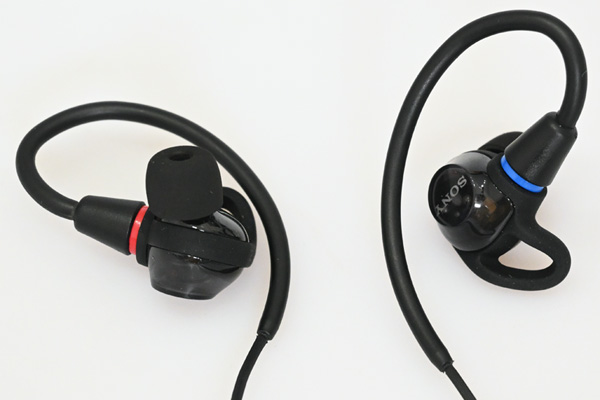
Sony’s IER-M500 in-ear monitors for professional monitoring have been available since August 2026. In-ear monitoring is becoming increasingly important in both live performance and mobile audio production. As a result, there’s a whole range of new in-ear monitors on the market - and we’ll see how the Sony IER-M500 stacks up.
Scope of Delivery
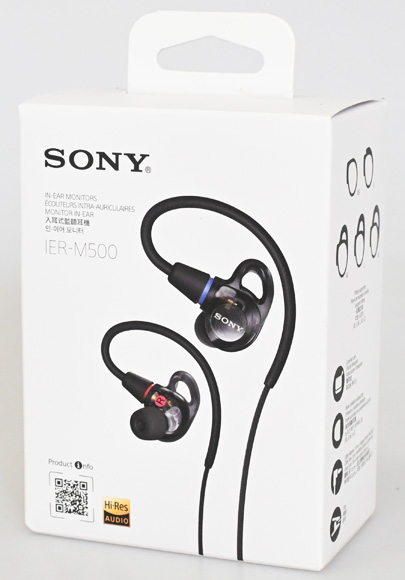
First, it’s worth noting that the Sony IER-M500 comes in three different versions: the one we tested - black with subtle left/right markings (blue/red) - labeled “IER-M500 black,” then a transparent version with the same subtle markings, labeled “IER-M500 clear,” and a version where one earbud is red and the other is blue, known as the “IER-M500 red and blue.”
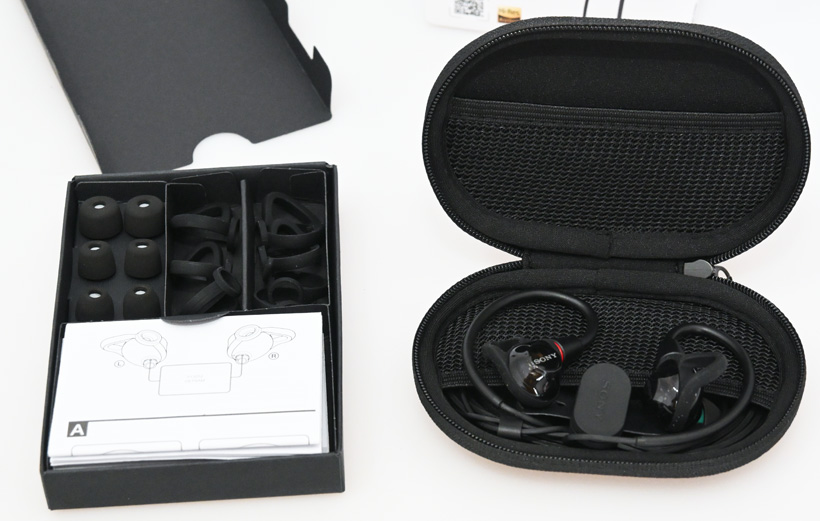
The scope of delivery includes the earbuds with medium-sized ear tips already attached and matching medium-sized silicone ear cushions. A fabric carrying case is also included (see image above).
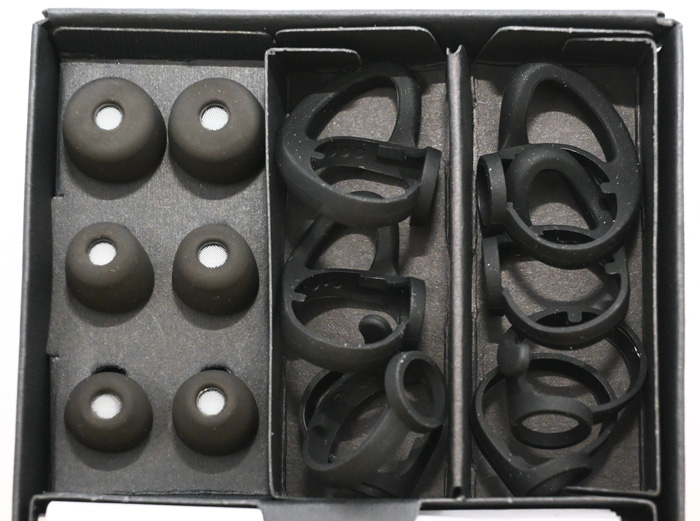
The scope of delivery also includes three pairs of ear tips in sizes L, S, and XS, as well as pairs of silicone ear pads in sizes XL, L, S, and XS.
Technical Specifications
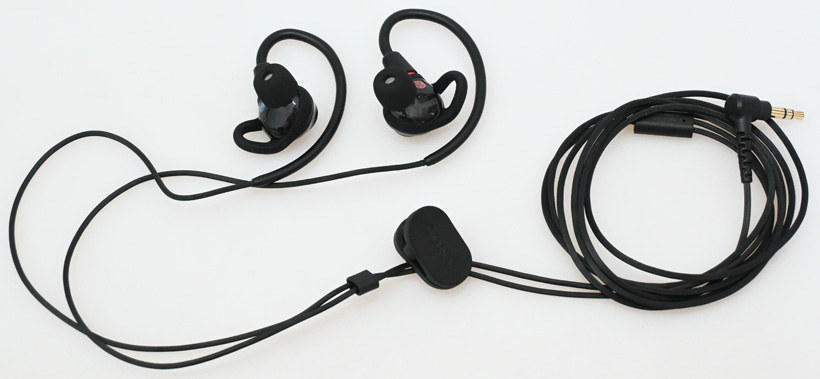
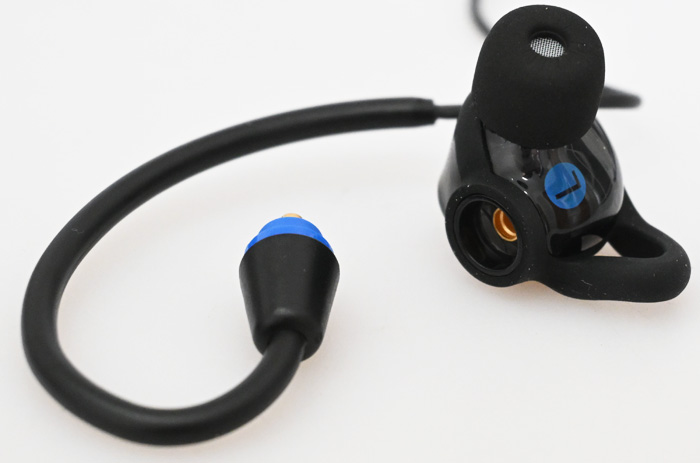
The Sony IER-M500 comes with a 1.6-meter-long cable equipped with a clip for attaching it to a collar. A 3.5-mm jack is used as the connector on the device side. The connection to the two earbuds is made via MMCX-compatible connectors (see image below), as is now standard for professional in-ear monitors. Theoretically, other cables could be connected here too, but there’s really no reason to do so, as the included cable is of a very high quality. Incidentally, the weight without the cable is just under seven grams.
The frequency range is specified as 10Hz to 40kHz. This makes the earbuds compatible with “High Resolution,” how Sony calls it. The frequency range of most other in-ear earbuds in this price range typically goes up to a maximum of 20kHz. This also ensures a very good reproduction of transients. The earbuds have an impedance of 16 ohms and a sensitivity of 103dB/mW. The dynamic driver has a diameter of 5mm and is a single driver covering the entire frequency range. The manufacturer specifies the maximum power handling as 500mW (according to IEC)
In Practice
Personally, I usually have to use the largest ear tips with in-ear headbuds. With the Sony IER-M500, however, the size M ear tips paired with the size M silicone cushions fit very well. Thanks to the wide variety of sizes available for both the ear tips and silicone cushions, there’s a suitable option for every ear size.
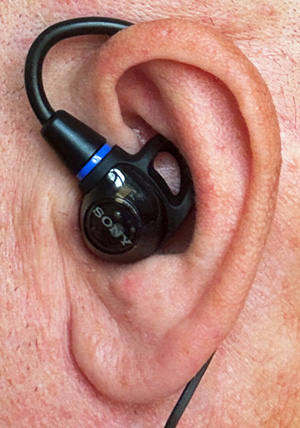
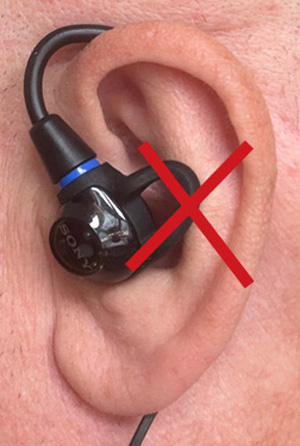
The cable is routed around the ear and back. It’s pre-curved so that this can be done easily. The ear tip (see image above) is gently inserted into the ear, significantly stabilizes the fit. The silicone tip should not rest on the ear (see incorrect montage in the image below).
Unfortunately, I always have trouble with in-ear headbuds falling out or becoming slightly loose during vigorous movements or after wearing them for a long time. But with in-ear headbuds in particular, a secure fit is especially important. This is because if the ear canal isn’t sealed tightly, the sound quality changes - especially the bass response. I have yet to use an in-ear monitor that stays in place as securely as the Sony IER-M500. This is ensured, among other things, by the silicone ear tips, and the cable clamp on the cord also prevents the earbuds from slipping due to cable pull. The comfort is excellent.
But it’s not just the comfort that impresses - the sound is also very balanced and neutral, making them suitable for a wide range of applications, from instrument monitoring, FOH monitoring, or monitoring at the monitor station, to mobile voice or music production. Only for very low-frequency instruments such as the bass guitar or similar I would generally recommend an in-ear monitor tailored to that frequency range. However, this should by no means be interpreted to mean that the IER-M500 lacks bass. I find the sound tuning to be exceptionally well done, and it’s clear that the needs of professional users have been taken into account. The IER-M500 allows for excellent sonic evaluation of a mix - something that’s usually not the case with in-ear monitors from the consumer segment. The external noise isolation is also as expected. Physically speaking, you won’t be able to achieve much more with in-ear monitors.
Conclusion
According to Sony, the price for the IER-M500 is 119 euros. That’s quite remarkable for a pair of earbuds considering their build quality, sound quality, and comfort. At the time of this review, I consider the IER-M500 to be one of the best in-ear headbuds in its price range.