 How to resolve AdBlock issue?
 2026 Eurovision Song Contest in Vienna
A Look at the Technology Behind the World’s Largest Live TV Music Event
Author: Peter Kaminski | Photos: Peter Kaminski and Archive (3)
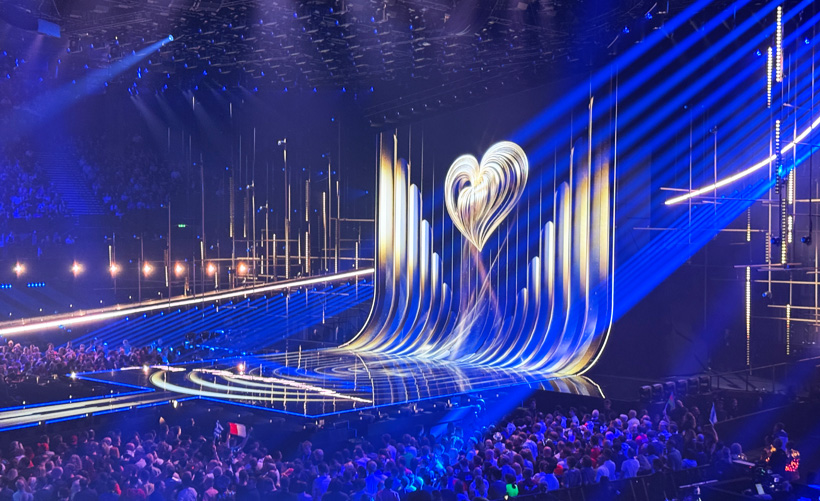
The seventieth Eurovision Song Contest (ESC) took place at the Stadthalle Vienna from May 12 to 16, 2026. The event was already held in this venue back in 2015, and I was there at the time, just as I have been at many other ESCs. This provided a great opportunity to observe and evaluate the technical developments over the years. The technical effort involved in the ESC is always enormous. What the Olympics are to sports events, the Eurovision Song Contest is to live music events. Here, we’d like to provide a comprehensive look at the production technology, focusing primarily on audio, networking, and communication, while also taking a brief look at other technical disciplines.
Stadthalle Wien
The Stadthalle Wien opened in 1958 and can accommodate an audience up to 16,000. During the ESC this year, approximately 11,000 fans were able to experience the event inside the venue. The ESC features a wide variety of areas surrounding the main arena, including outdoor spaces. Inside, for example, there are artist dressing rooms and makeup areas, etc., while the many containers outside are used for technical equipment.
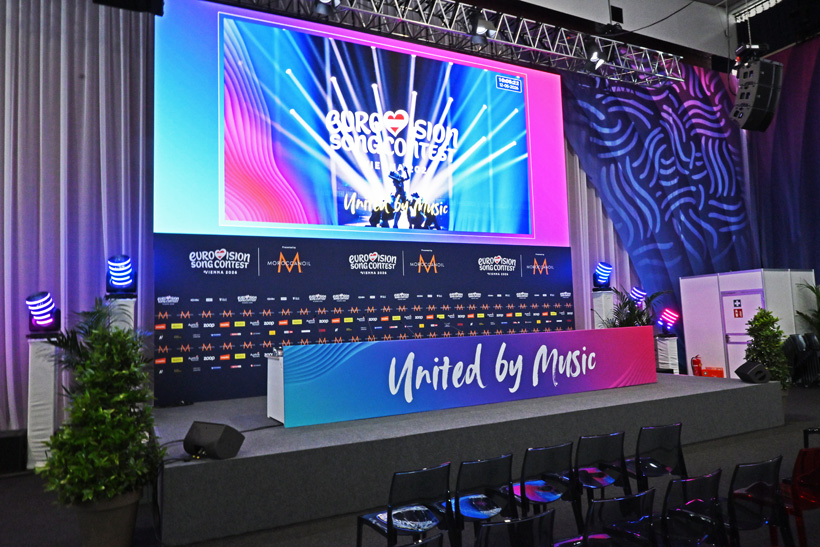
Given the high level of international media interest, a press center was, of course, also present. The artists were able to hold press conferences on a stage (see image above).
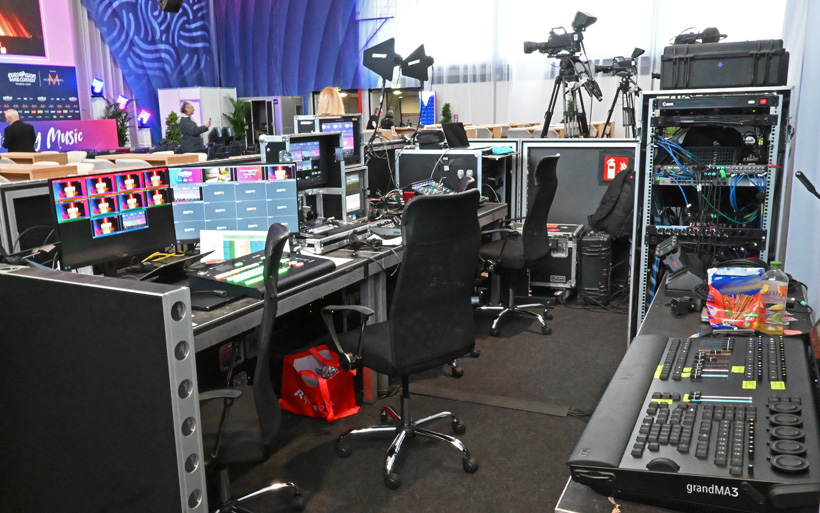
Naturally, it was equipped with the appropriate lighting, as well as wireless and audio technology (see image above).
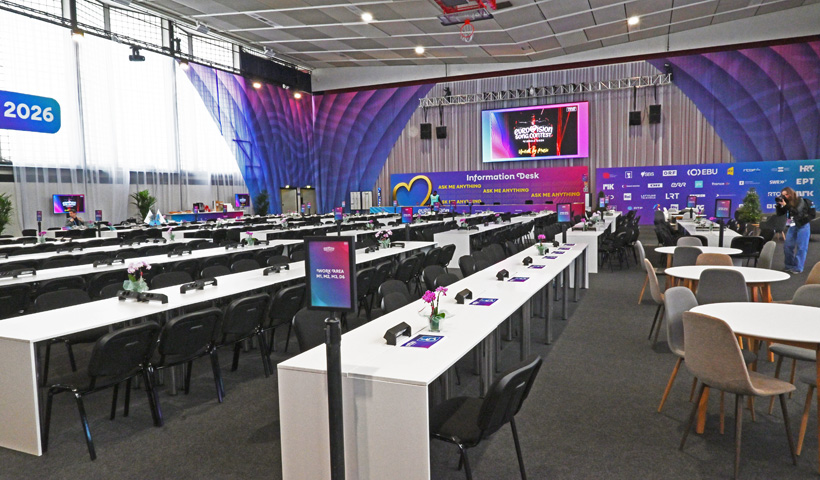
Seats and tables for accredited journalists were available right next to it.
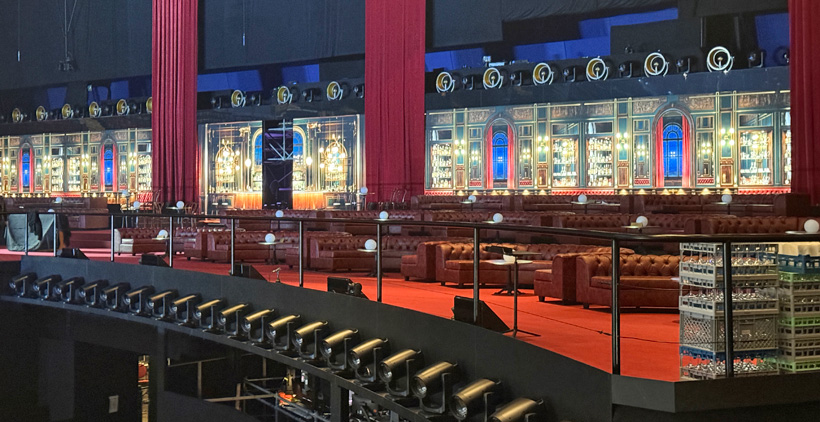
The so-called green room (see image above) in the hall provided a place for the artists to retreat during the two semifinals and the final. As always, this area was also actively integrated into the TV broadcast.
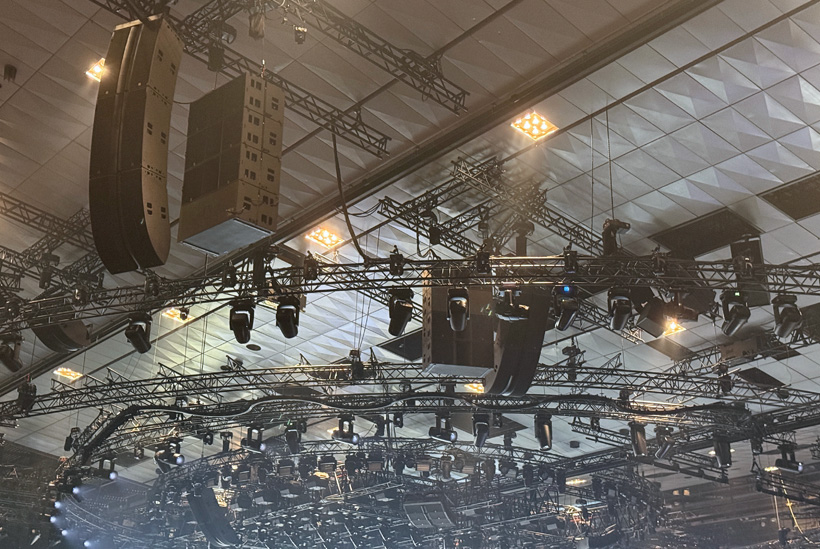
Thanks to the high ceiling in the hall, it was no problem this time to accommodate both sound system components and spotlights. For the TV broadcast, it is important that the sound system components are not visible on camera, and this requires sufficient headroom. However, we do not wish to go into further detail about the sound system in this article. Suffice it to say, though, that the sound in the venue was truly impressive. That hasn’t always been the case at past Eurovision Song Contests.
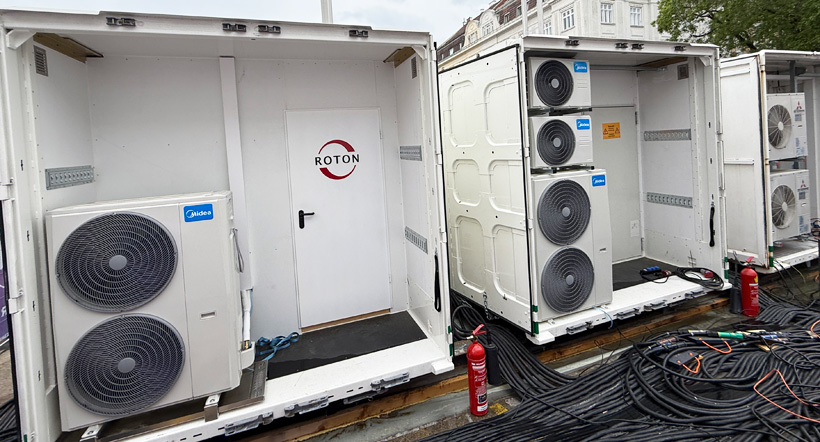
Auch für Notstromversorgung war gesorgt. Dafür wurden im Außenbereich einige Container bereitgestellt, mit denen man zumindest temporäre Totalausfälle überbrücken konnte (s. Abb. oben).
Lighting and Stage Design
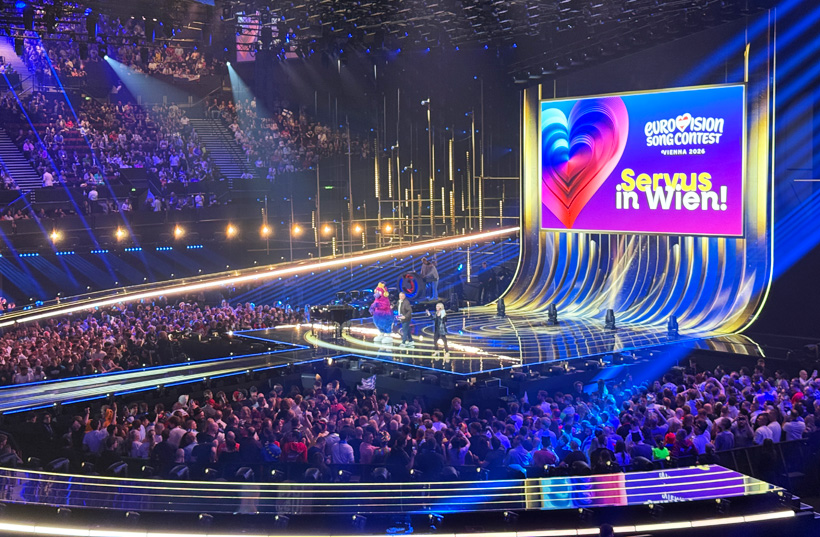
A lot has changed in recent years regarding stage design and lighting. Large LED panels are increasingly being used, such as on stage in the form of a curved 12 x 8-meter Infinity Screen. There was also a path leading from the stage to the green room and an arch (see image above) on which the artists could move around. Approximately 1.4 kilometers of LED strip was installed. A total of 28,000 individually controllable LEDs were used. To ensure everything could be controlled, eight Disguise media servers and 16 Kelios 8K LED controllers were employed.

It’s interesting to note that the LED panels on the floor were also used to mark the positions of stage elements for the respective artists’ performances. Incidentally, the stage crew had their hands full during the short 42-second setup break. Stage setups are becoming more complex every year. At the 2011 edition of the ESC in Düsseldorf in Germany, positions on stage were initially marked with lasers. However, thanks to the LED panels, this is no longer necessary, as information can simply be displayed on the floor. In terms of energy efficiency as well, significant improvements were made this time around through the exclusive use of LED and laser technology.
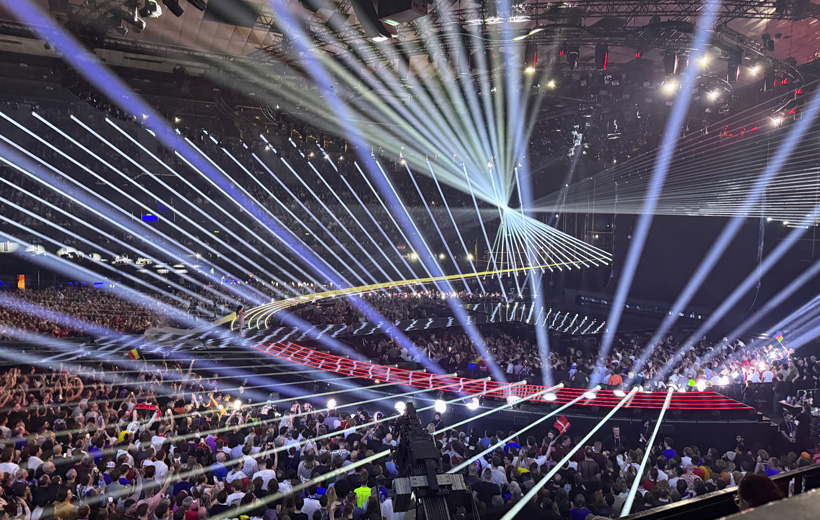
Over 3,100 fixed spotlights were used. For the first time at this ESC, 80 high-speed moving-light winches were also deployed. In addition, there were 200 special-effects machines, 250 CO2 cylinders, and 45 pyrotechnic stations on stage, which provided smoke, fog, flames, and other effects.
Video Technology
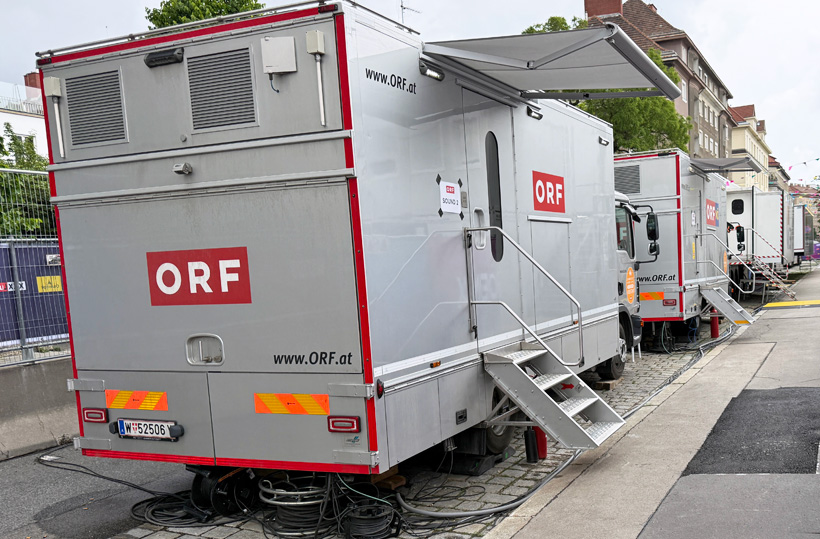
Even though video technology isn’t our main focus, we’d like to touch on it briefly, as there were some interesting developments here as well. When you compare how many OB vans were required just a few years ago with how compact the technology has become, then this is truly remarkable.
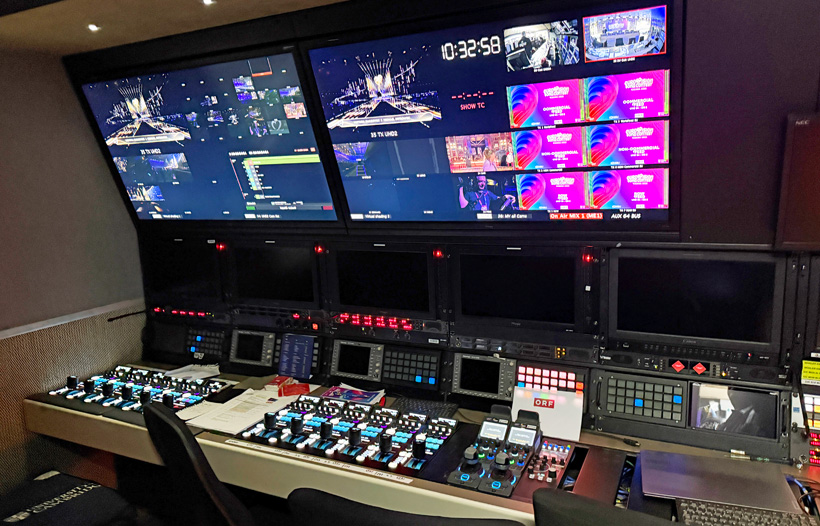
Here’s a look inside a broadcast truck housing the video control room. Two broadcast trucks were used for the video feed: the NEP UHD2 and UHD24. The video production was output in 1080i25 with stereo and 5.1 surround sound. For audio, two ORF OB vans were used—one for the music mix and one for the main mix, which also served as a backup.
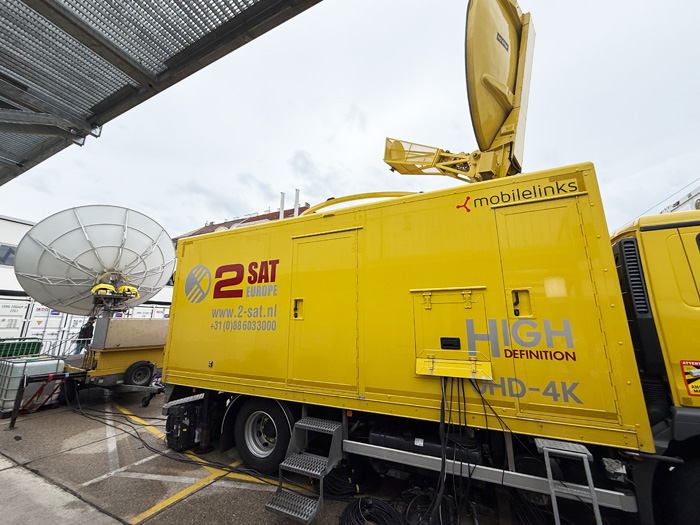
Of course, satellite transmission was also used to distribute the TV signals, but IP transmission technology has become widely adopted here as well.
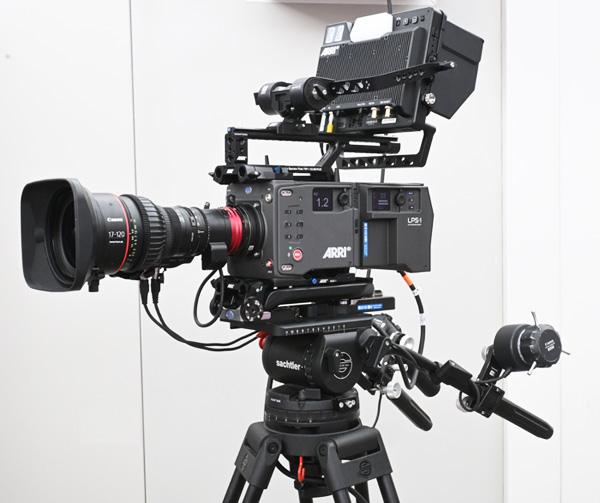
A new development is the use of ARRI ALEXA 35 Live cine cameras for the entire live TV production. Riedel, which has played a key role in the ESC’s networking and communications infrastructure for many years, has acquired ARRI and is now also involved in the video segment of the ESC. Thirty-five ARRI ALEXA 35 Live cameras were in use, specifically: 10 HF cameras, 8 on tripods, 2 crane-mounted, 3 dolly cameras, 3 flying cameras, 1 gimbal camera, 4 Steadicams, and 4 portable handheld cameras. In addition, there were 3 PTZ cameras.
It’s interesting to note that the video production workflow also incorporated processes typical of cinema, such as individual color grading for each performance. From a video technology perspective, this was a major step forward. The limitations for viewers here are more likely to be found in the broadcast standards used by television networks.
Network Technology
The IP infrastructure was implemented by Riedel Communications. I can still remember the vast quantities of multicore cables used at the ESC event a decade ago. Thanks to the consistent use of IP network technology, everything has become much more compact. The connection to the ORF broadcast center was also established via fiber optics and was geo-redundant.
For the network infrastructure set up on-site by Riedel alone, approximately 13.8 kilometers of fiber-optic cable were laid, and over 80 network switches, as well as 26 Mediornet racks were deployed, providing up to 100 GBit/s. In a few locations, the 100 Gbit/s bandwidth was insufficient - for example, at the FOH. There, two 100 Gbit/s links were interconnected and made available. The entire setup was on a scale typically found in a data center. There were also a few audio islands connected via MADI.
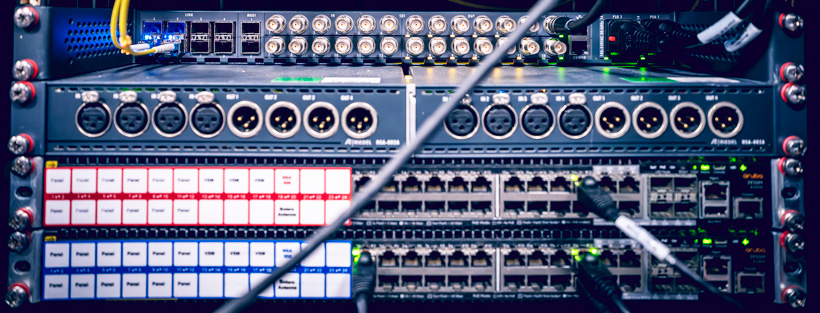
The local network topology should not be imagined as a classic ring configuration; rather, it was structured into 14 isolated segments, from which connections radiated out in a star configuration to the individual components - and were generally redundant via an alternative path. In addition to communication and audio, the video paths were also IP-based. Even the mobile wireless cameras used IP infrastructure for real-time transmission. A total of 400 video signals and 800 audio signals were transmitted through Mediornet. Central timecode distribution also ran over the network, with redundant timecode masters housed in the TV compound.
Radio Communication and Intercom
The radio and intercom technology was also centrally supplied by Riedel Communications. Regarding radio communication as part of the overall intercom structure, both analog and digital TETRA-based radio technology were used here. The analog radio technology was primarily focused on the technical crews in the hall, as it allowed for delay-free communication. Catering, security, the media center, and other more organizational user groups, on the other hand, used the digital TETRA radio.
A total of 230 analog radios (including MOTOTRBO R7 models) with 16 repeaters were deployed to ensure radio coverage, along with eight simplex channels. Riedel’s RiFace was used as a bridge between wireless communication and the intercom infrastructure to ensure that every radio channel was also available on the intercom. In addition, 430 TETRA radios were deployed with four networked DAMM MultiTech BS422 base stations, enabling 15 simultaneous calls across more than 40 talk groups - which proved to be more than sufficient. The building itself also presented a challenge. For example, the underground parking garage was used for storage, so radio coverage had to be ensured there as well.
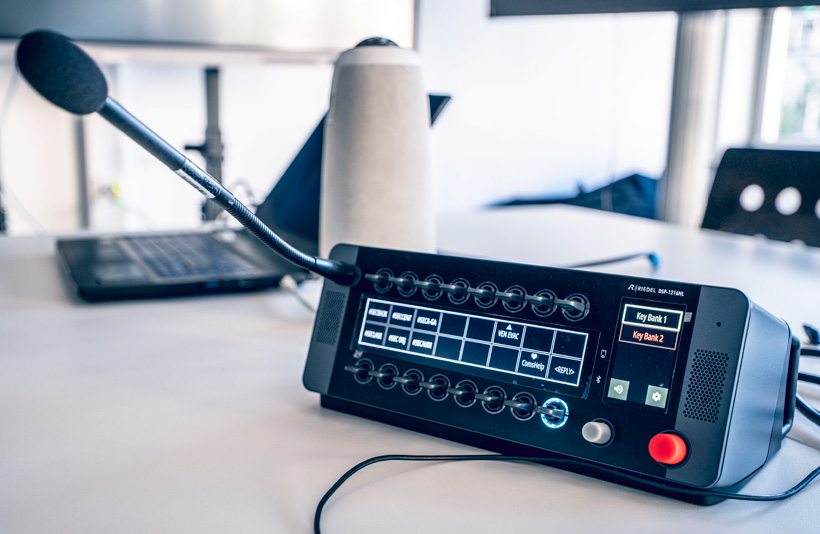
For the intercom system, 120 intercom panels were installed, and Riedel’s new desktop intercom units were used for the first time at an ESC event. In addition, 190 Bolero belt packs were used for wireless communication via DECT. It should be noted that the Austrian Telecommunications Authority had recommended using the 1,900 to 1,920 MHz frequency band for this purpose. The Boleros were configured accordingly. This, of course, also helped ensure an interference-free operation that was isolated from other services.
Riedel talkback units were also available for the national commentators, connected via four on-site SIP servers, as had been the case in previous years of the ESC. For redundancy, both a main and a backup codec were provided. Another new feature was the use of Riedel’s “Same” for auto-leveling the commentators’ audio.
Wireless Microphones and In-Ear Monitoring
Let’s now turn to an area where the ESC broke new technical ground: the wireless transmission of microphone and monitor signals. The Spectera wireless system, based on WMAS broadband radio technology, was used here for the first time. In fact, the fading issues at the 2014 ESC in Copenhagen were the impetus for Sennheiser to develop a new digital system. The idea was to use an 8-MHz-wide TV channel with TDMA technology for transmission in both directions - that is, for the microphone signals and for the artists’ monitoring. However, we do not wish to go into detail about the underlying technology here, but rather focus on its implementation and application at the 2026 ESC in Vienna.
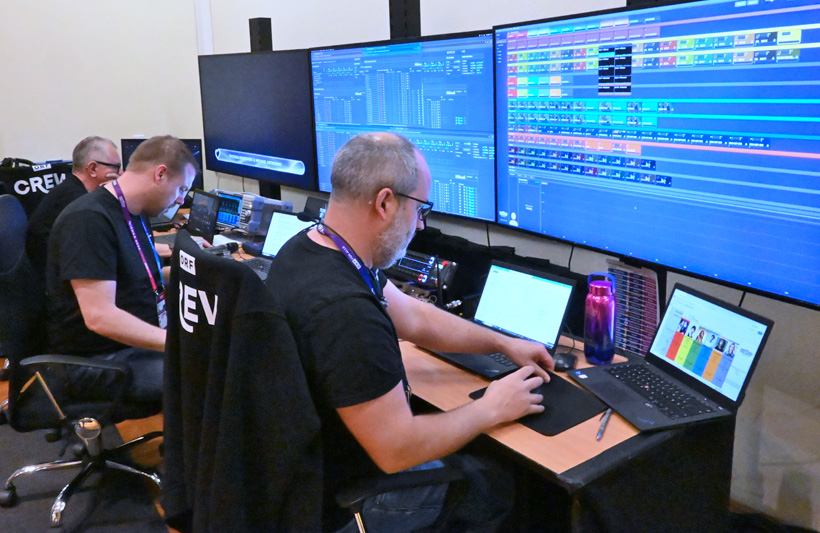
Wireless and monitoring equipment was located in the so-called “Sound Room” backstage. This is where the operator stations for the wireless system were located (see image above). On the screens, you can see the Spectera WebUI in the center and, on the right, the Sonoros software for management, monitoring, and logging.
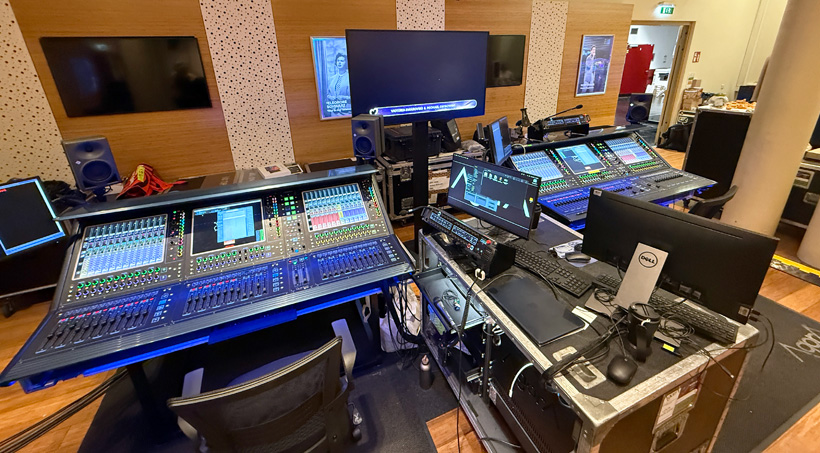
The two monitor mixing consoles (see image above) were also housed in the Sound Room. Two consoles were used for redundancy.
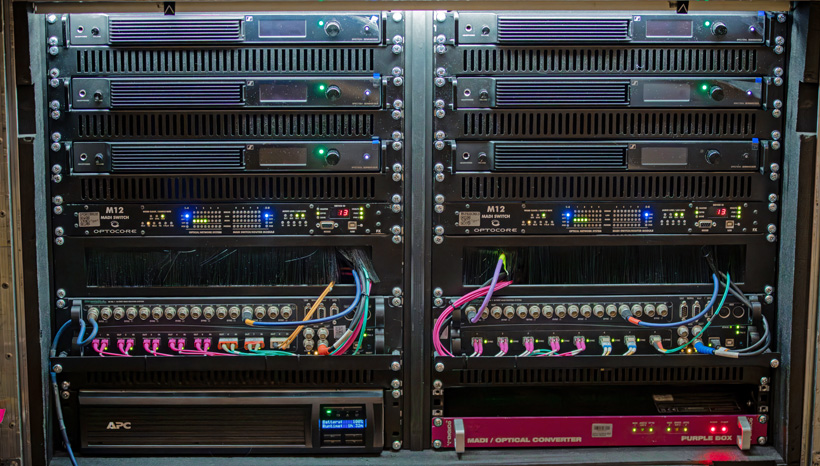
Digital transmission technologies have already been used at the ESC events in recent years for microphone and monitor signals, but without WMAS. The major difference between Spectera and other systems is that a bodypack can operate unidirectionally. I can still remember past years when there were masses of racks, crammed full of 19-inch receivers and transmitters. At the 2026 ESC, the use of WMAS has made everything extremely compact here as well (see image above).
Only four Spectera base stations were used for transmission across four 8-MHz-wide channels (for a total system bandwidth of 32 MHz), with one base station serving as a backup system and another used for scanning and as an additional backup. A major advantage of Spectera is that the TDMA method ensures synchronization of the audio channels, thereby avoiding phasing problems that can occur with non-synchronized systems.
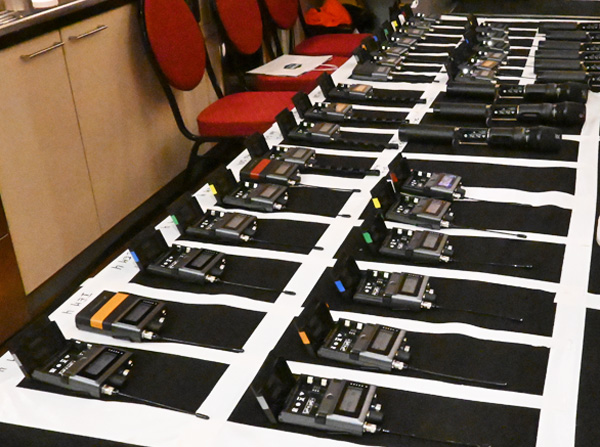
In addition, 46 Spectera SKM handheld transmitters and 101 bidirectional Spectera SEK bodypacks were used for the artists and presenters. For the opening and during intermissions, IE 100 Pro in-ear monitors and EK 2000 IEM bodypacks were also used for the orchestra and artists, fed via an analog channel.
Another new feature was the rotation of the wireless components. Previously, each artist had a microphone or bodypack with a headset and an IE monitor receiver. Since no more than six people were ever on stage during any given performance, this time six Spectera handheld transmitters, a rotation of six Spectera SEK bodypacks for in-ear monitoring, and a rotation of six Spectera bodypacks with headset microphones and in-ear monitors were provided.
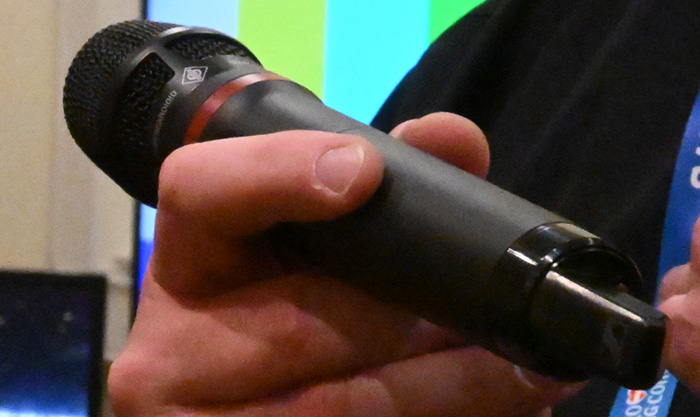
The new KK 105 A microphone capsules from Neumann were used for the handheld transmitters (see image above), which were not yet commercially available at the time of the ESC. Additionally, Sennheiser Headmic 4 microphones with a cardioid polar pattern were used for artists who wanted to keep their hands free.
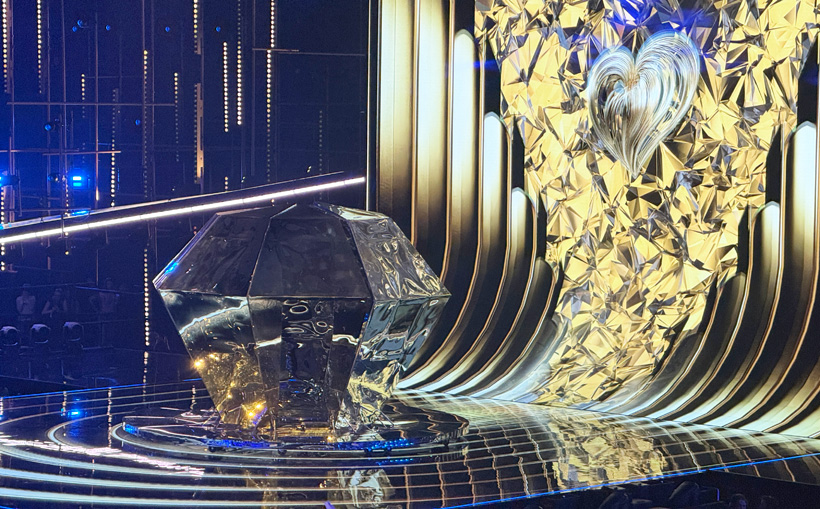
The stage installations presented a very practical problem. This year, a great deal of metallic material was used (see image above), which meant that the number and placement of the antennas posed a particular challenge. But even that was solved with the Spectera system. The ability to check the status of the bodypacks and handheld transmitters via Spectera and make adjustments remotely undoubtedly made the workflow easier and also safer. Issues such as disconnected in-ear monitors, etc., could be detected immediately.
Conclusion
If you think back to the Eurovision Song Contest held in Vienna in 2015, it’s truly amazing how much has changed technologically in those eleven years. There were also changes compared to last year, and the most notable were certainly the use of Sennheiser’s Spectera wireless system for audio and the use of ARRI ALEXA 35 Live Cine cameras for video, including cinema-style workflows. Therefore, this event was also a technical showcase of various technologies, systems, and products.