 How to resolve AdBlock issue?
 Beyerdynamic DT 30 IE
Affordable In-Ear Headphones for General Use
Author and photos: Peter Kaminski
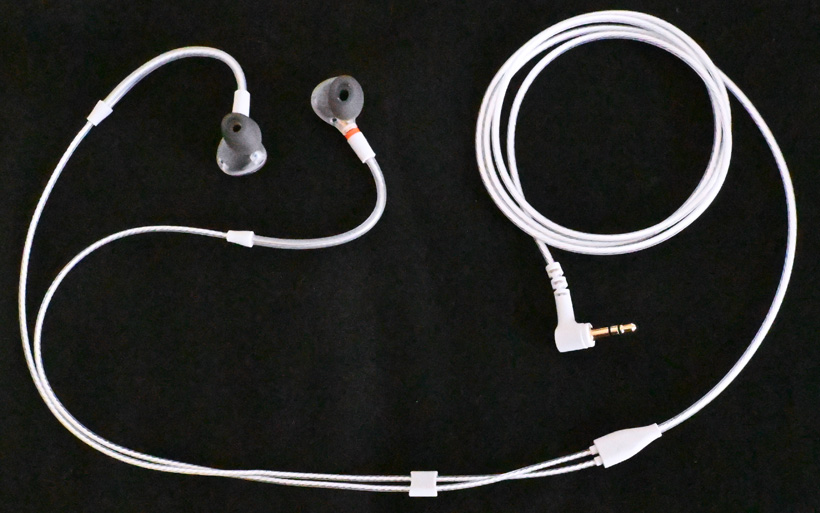
In mid-June 2026, Beyerdynamic introduced a new in-ear headphone, the DT 30 IE. It is priced below the Beyerdynamic DT 7x IE series, which we had already tested. We had the opportunity to test a sample of the new product before it became available, as well as to compare it to the DT 70 series of in-ear headphones.
Package Contents
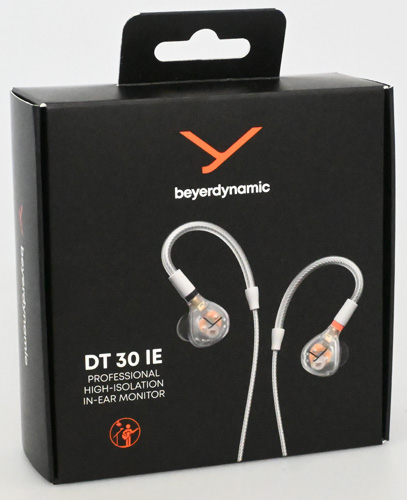
Much of the DT 30 IE is identical to the DT 7x IE series, and this is already evident from the package contents.
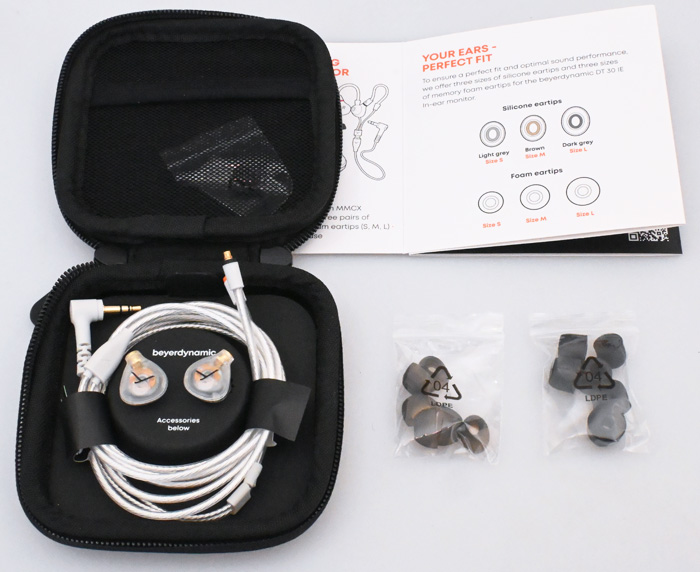
The earphones come in the same case and with nearly identical accessories. Incidentally, the included replacement ear tips are not compatible with those of the DT 7x IE series. Unlike the DT 7x IE series, a 6.3-mm jack adapter is not included, which is likely due to the product’s target customer base.
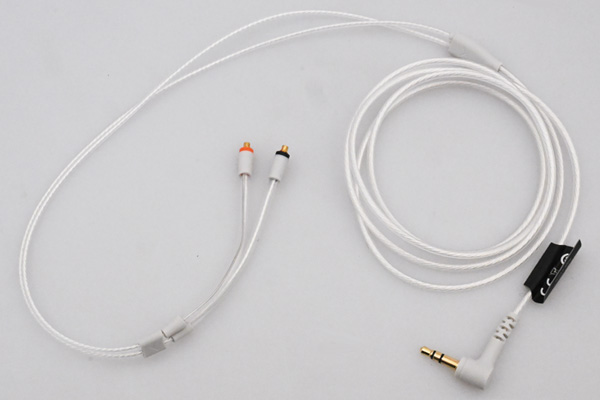
The Teflon-reinforced cable on the DT 30 IE is white or transparent on the earbud side, therefore matching the DT 30 IE’s earbud design. The connectors between the cable and the earbuds are also MMCX coaxial connectors, and the point where the cables split can be adjusted.
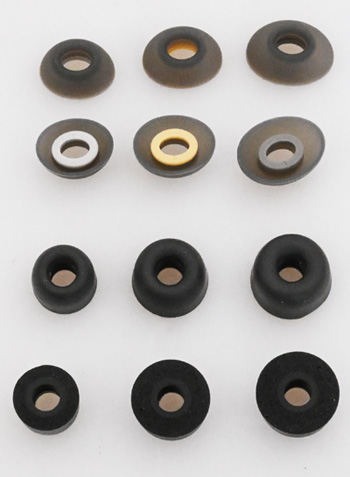
Three pairs of silicone ear tips and three pairs of foam ear tips are included. The difference from the DT 7x IE series is that the latter includes two additional pairs of silicone ear tips in intermediate sizes, and the foam ear tips are not Comply Tx-500.
Design and Technology
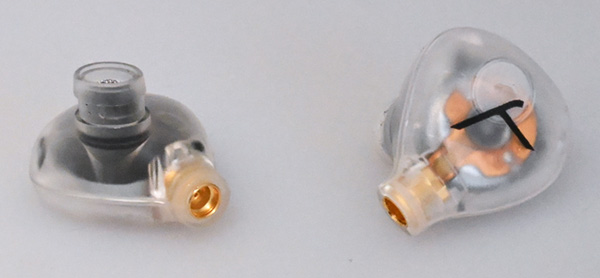
Now let’s move on to the technology and the drivers. The form factor is exactly the same as that of the DT 7x IE series earbuds, but the key difference lies in the drivers. This is also noticeable in the weight. The DT 70 IE weighs 3.0 grams, while the DT 30 IE weighs just 2.7 grams without the cable and earpiece. The handmade TESLA11 driver is not used here, but rather a different, similar dynamic single-driver unit that was also developed in Germany but is not produced there. Otherwise, the price - which we’ll get to later - would certainly have been impossible.
Let’s take a closer look at the technical specifications. The nominal impedance is 18 ohms, which is slightly higher than that of the DT 7x IE series. The sensitivity is slightly lower compared to the DT 7x IE series. The sound pressure level is 111dB SPL at 1mW and 1kHz, or 128dB SPL at 1 Vrms and 1kHz. The manufacturer specifies the frequency response as 5Hz to 20kHz, which is narrower than that of the DT 7x IE series.
The total harmonic distortion is also slightly higher at 0.08% compared to 0.02% at 1mW and 500Hz. The isolation from external noise is 39dB (A-weighted), identical to the DT 7x IE series.
In Practice
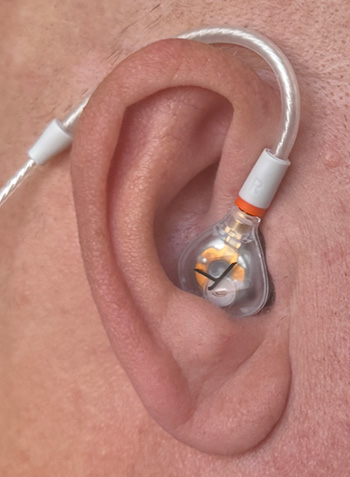
There are no differences in comfort between the DT 30 IE and the DT 7x IE series. The only thing is the limited selection of sizes for the silicone ear tips, but that’s really a luxury problem. As already mentioned in the review of the DT 7x IE series, the DT 30 IE is also perfectly suitable for glasses wearers. You can see the wearing position in the image above. The cable is routed over the ear, which stabilizes the earbuds’ position on the ear. The fit is secure thanks to the lightweight design and the various ear tips, and is absolutely sufficient for normal use. For prolonged headbanging, however, we recommend securing the cable with an additional fastener.
Now to the sound. The DT 30 IE’s narrower frequency response in the high frequencies compared to the DT 7x IE series doesn’t make much of a difference in practice. It’s only slightly noticeable, for example, with very short transients and large amplitudes. By the way, we tested these using the Lake People G108 headphone amplifier. If you compare the four models in the DT 7x IE series, the DT 70 IE is most similar to the DT 30 IE. But there are also sonic differences, even if they aren’t as significant as expected. The DT 30 IE is tuned slightly higher in the frequency range. In the bass range, you therefore also notice slightly less energy in a direct comparison. However, it must also be clearly emphasized that the models in the DT 7x IE series are all sonically tuned for specific applications. The DT 30 IE, on the other hand, is very versatile, ranging from instrument or vocal monitoring to simple music listening, and it is also an excellent choice for monitoring during video recording.
The DT 7x IE series earphones are rated IP 68 or IP 65 (DT 71 IE), making them dustproof and, in the case of IP 68, even waterproof. The DT 30 IE is rated IP 54, making it dust-protected but not dust-tight, and only splash-proof rather than waterproof. However, this is entirely sufficient for normal indoor use and under typical sweat exposure. Those who want to be prepared for extreme conditions should opt for the more expensive 7x IE series.
Conclusion
Now we come to a rather remarkable aspect of the product: the price, which is only about 120 euros, compared to just under 500 euros for the DT 7x IE series earbuds. You get a lot of what the DT 7x IE series has to offer, but in terms of drivers, protection ratings, and included accessories, you have to accept some minor compromises - though these are significantly mitigated when you consider the price.
For the price, the sound is absolutely convincing. Therefore, these earbuds are certainly the ideal product for beginners in in-ear monitoring, budget-conscious users, or users in the AV sector who use the earbuds primarily for monitoring purposes, as well as for those seeking an application-independent in-ear earbud for a wide range of uses.